Sunday, 2 October 2022

Comrade Car - digging into the interior (Part 3)

Comrade car wasn't just dirty. Comrade Car was filthy. A mix of wood dust and general neglect for vehicle hygiene, meant that once he was parked in the sun this car was a dusty, stinky mess. Plus there were two weeks between buying and the delivery, which left me with ample amounts of time to read up on all the weak points and things one should change, if he or she wants to enjoy their car for a while. 

I decided (and that's rare for me), at least a basic cleanup might work wonders.


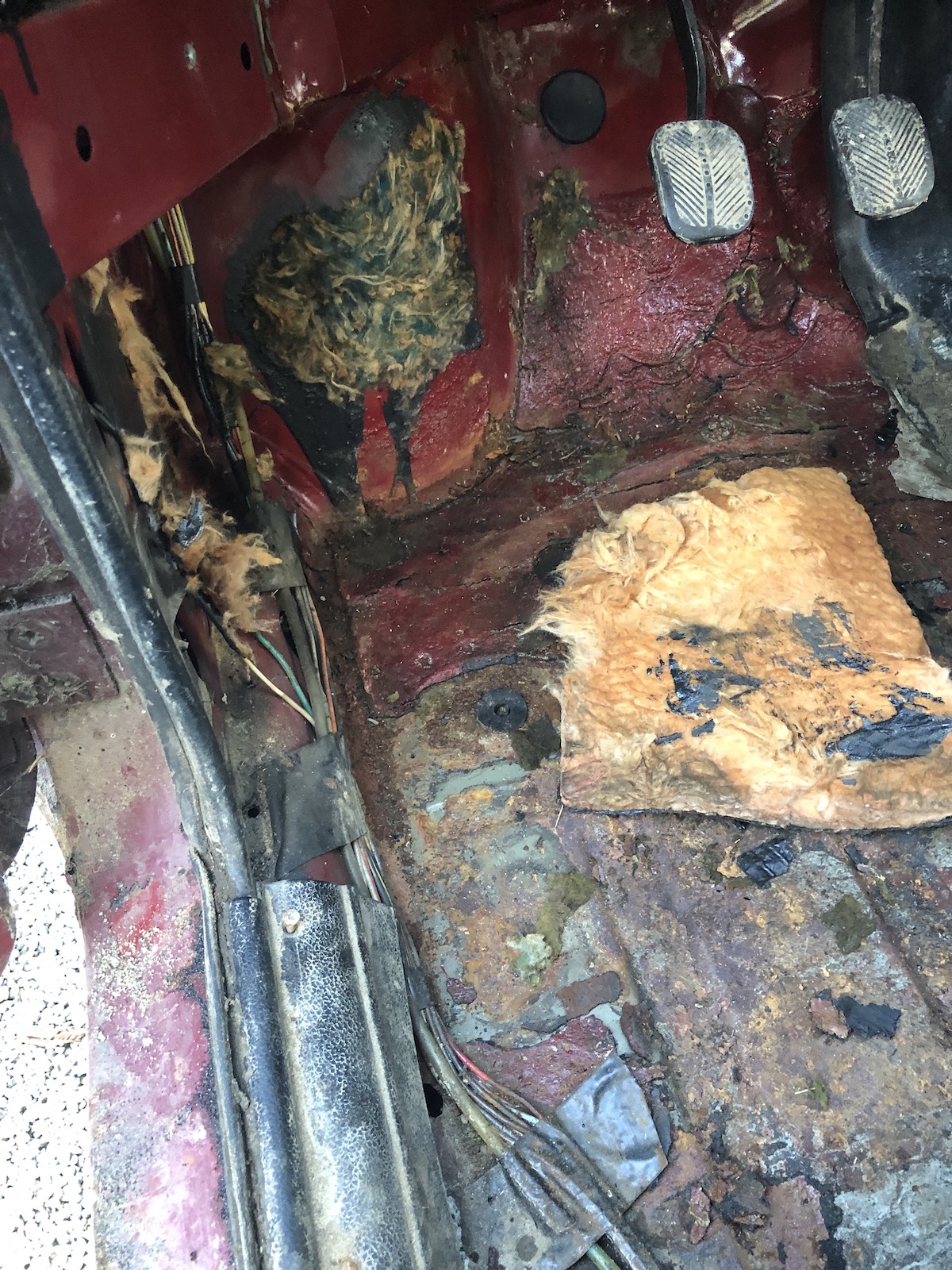
The next step was a warning that I had heard from a lot of old car owners: The sound deadening common at the time was most commonly a combination of woven fibre and bitumen mats underneath. Whilst not an entirely bad idea, the problem is that the if the car leaks (and they all do), the woven mat soaks up the water and stays moist for months and the moisture then slowly creeps through the most minute cracks in the bitumen mats onto the steel, slowly rotting the car from the inside out. Especially on vehicles that were built in a rather cost conscious (i.e. cheap) way and have only primered panels under the bitumen. And that's exactly what happened here. Plus add the charming scent of "wet dog" to the mix and you'll probably understand, why I was motivated to dig into this matter rather sooner than later.
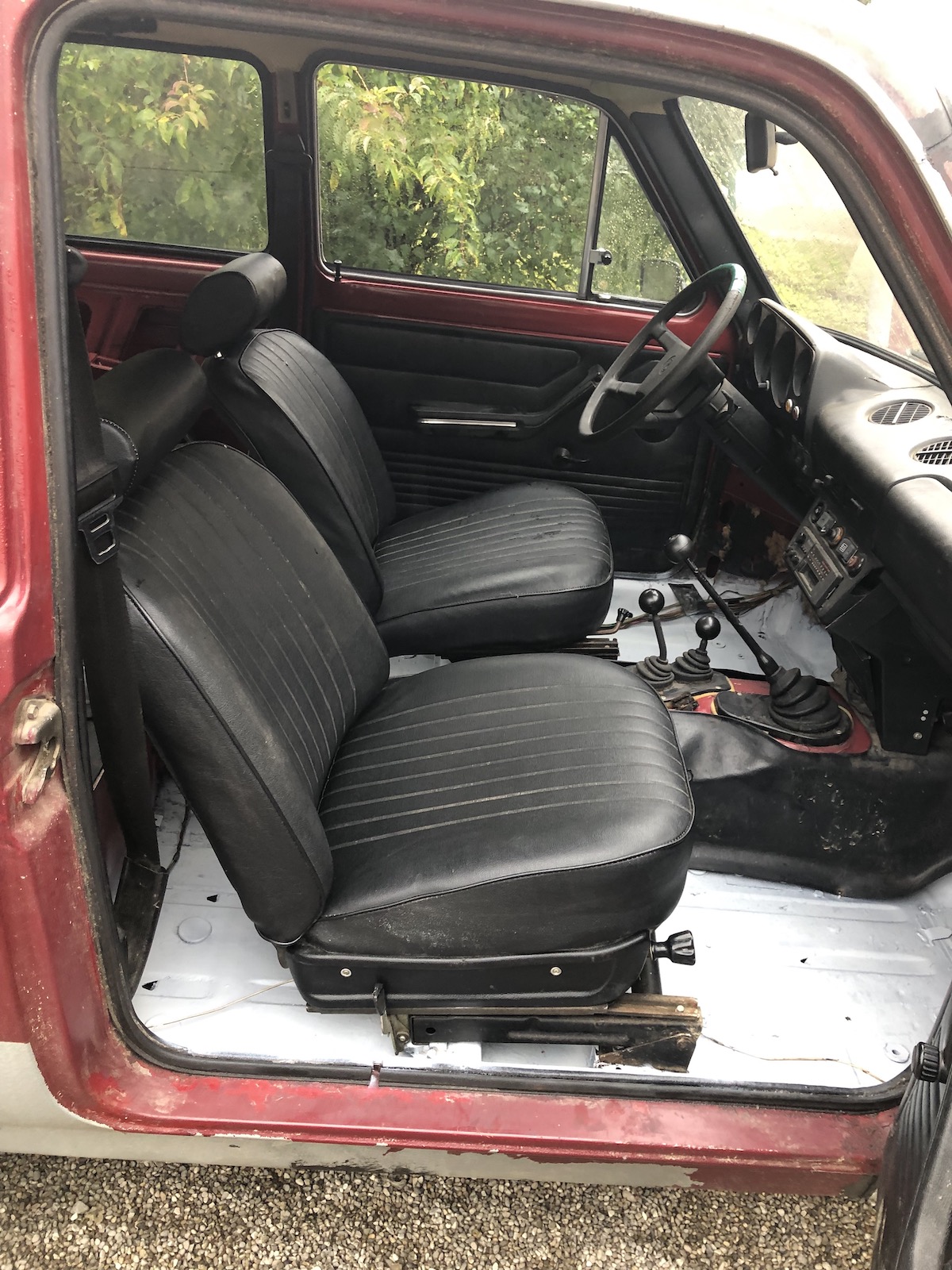
And then there was this one moment, where I just sat in Comrade Car, sighed and took it all in.  I am pretty sure that in official Soviet language there wasn't really an overarching concept of design in a Western sense as to make something appeal to the potential customer. Because why would you? The people were lining up to buy your cars, not because they were great, but because that's what you could get. (And from what I gathered, you actually had to be somewhat priviledged to get a Lada Niva at all.) 

Therefore just look at this dash and the steering wheel and the ignition barrel on the left side, like in a Porsche 911. Everything is at its place and all the extra gauges are there to let you know about the (important) vitals of your engine, when driving to that one oilfield in Baku, that you're supposed to prospect or along those railroad tracks in Siberia...


... then reality kicked in and I decided to clean the driver door window. Three times. Inside and out. Guess what, the glass isn't milky at all.
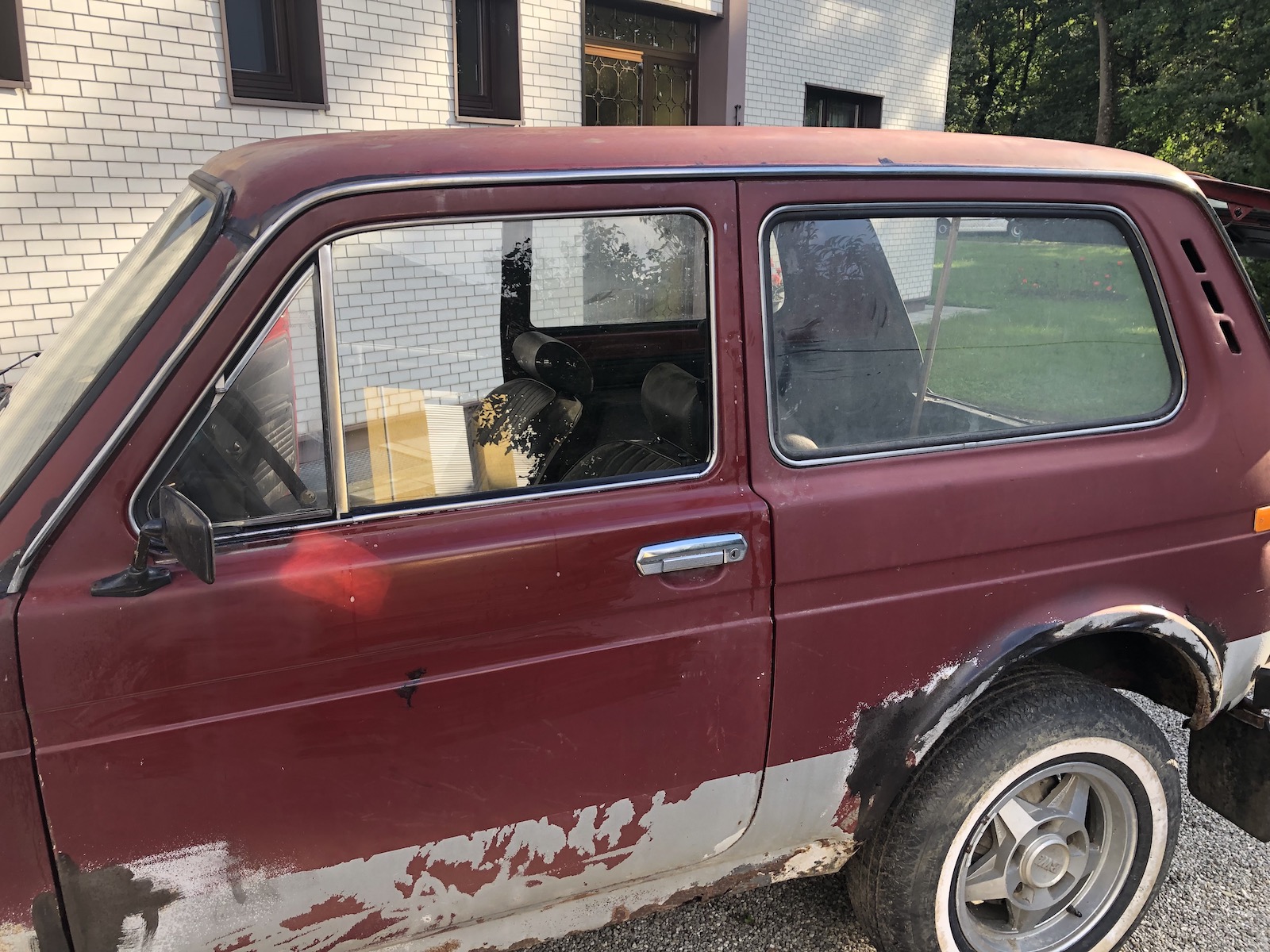
A few days later my first trip to a somewhat local Lada-dealer brought back memories of buying spares for my various Dneprs - new parts, rusty from the factory wrapped in sheets of newspaper with Cyrillic letters on them and the more fancy ones in wax paper. Knowing that the car would run, brakes and clutch were the logical next steps. As Comrade Car was forced to wait his time with the bonnet removed, both the containers for brake and clutch hydraulics were so brittle that the cracked, when I tried to removed the rotten supply lines. (I would later find out that any plastic vessel had severely degraded due to UV-light and age and thus I ended up replacing every single one of them.)

Niva's are known to be somewhat rustprone, but when people think of this they usually refer to the rusty exterior. Whilst absolutely true, in my opinion the bigger issue comes from the inside. In an attempt to quiet down the somewhat agricultural nature of these beast, generous amounts of fibre-mats and bitumen sheets have been applied on the inside. The problem: the furry mats suck the water up like a sponge and stay moist for a very long time. At the same time the bitumen mats will start to crack and thus water can seep through and slowly make the car rust from the inside out. 
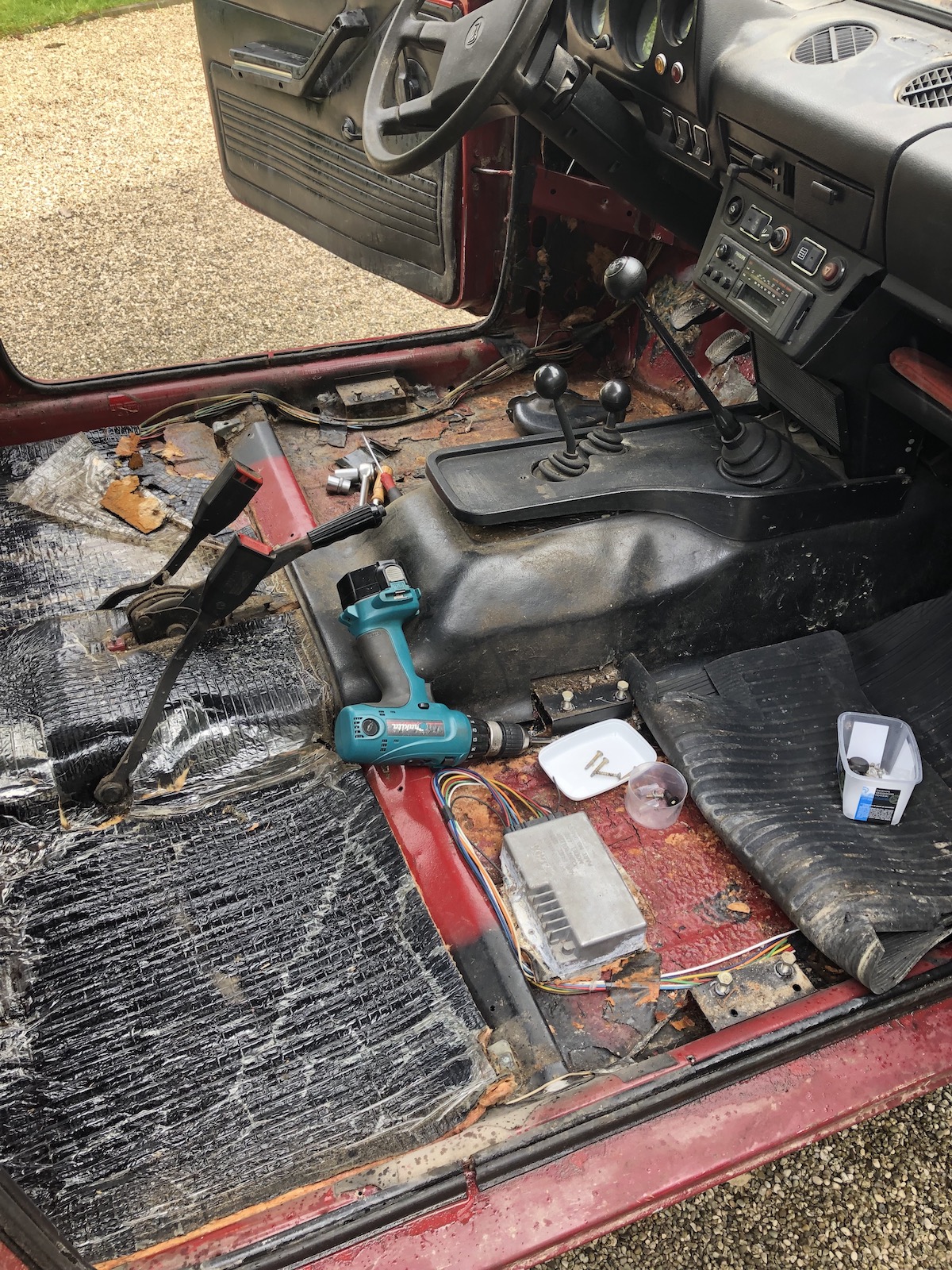
... and that's just what came out more or less straight away. Ultimately I would fill up two full bins and a smaller bag.

That being said: This is the original red - ain't it absolutely gorgeous?

I suspect, in the end it was somewhere around four to five hours with lots of swearing to get all of the bitumen out. In those areas where rust had already formed, it was an easy task of just peeling it off, but those spots, where it was constantly stepped on it was a real b*tch.

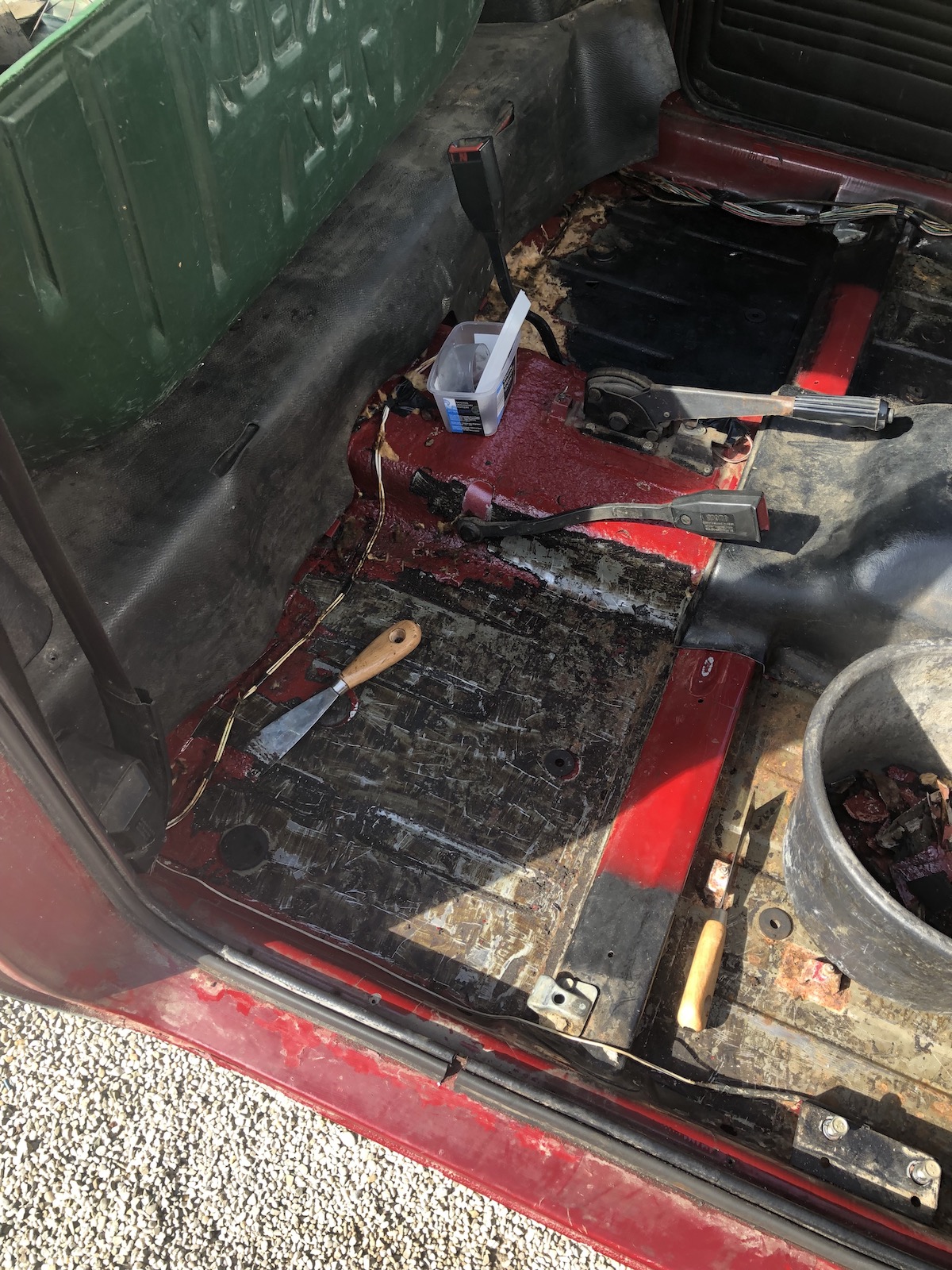
Then some brush-on rust converter.

And for the time being, some regular etch primer will have to suffice. 

Seats back in and ready for the first testdrive. 
As you probably worked out yourself, this is not a chronological depiction of the events that took place, but I used working on the interior, whenever I needed a break from other tasks. Trust me, of those plenty have been available. 


Comrade Car - Coming home (Part 2)

Now I admittedly make some dumb decisions, but I am not stupid. So part of the deal was to have the seller deliver the mighty Comrade Car to my workshop. Once they had left, I cracked open a bottle of brush-on rust converter and went to town. Which is when I again encountered this weird phenomenon with Eastern Block vehicles that a patch of blank metal can be right next to some completely rotten steel and only be milimeters apart with no apparent explanation. If you look closely at the left front mudguard you will notice how one part is completely rotten out and a blank bit is right next to it. (I've had this before on one of my Dnepr sidecars, where I missed to repaint on spot and it was uncovered for at least a few months and it was still spotless afterwards.)


Fun Fact: Directly from the Soviet Union imported Lada Nivas, where called Lada Taiga - to the best of my knowledge in the rest of the world they were sold as Lada 2121 Niva. Comrade Car is a 1600cc model with electronically managed Solex carb and catalytic converter. And as it was produced for export to Austria, it came standard with electronic ignition and these alloy wheels, made in Finland specifically for Lada by a company called BWA. (They are for sale as I swapped for the traditional Lada 16" steelies.)

So once I had the Comrade in my driveway I couldn't resist lying underneath it. The car has got a lot of problems stemming from being parked for a long time and not being cared for very well. (Most of the rust is the result of mud having stuck to all sorts of parts for several years.) But no further patches of rust were found on the underside. Neither the gearbox nor diffs seem to leak. The brakes and clutch-hydraulics are completely dead though.


So at this point it looked a lot like a car that had been parked for a while and must have had one really bad repair job on the left sill. Not too bad, eh?

Saturday, 1 October 2022

Comrade Car - Introduction (Part 1)

As my friend Yuriy put it: What the hell did you do, scan the small ads for the most rotten and cheapest Lada Niva? And in all honesty, he wasn't quite too far off. I went there because it meant having a little rideout on the old Dre-XT-Stück deep into the country-side and have a look at a car that was obviously trash. It was stored for several years in a dusty (yet dry) wood storage barn, had dry rotten tyres and the left sill was at best a glimpse of its former greatness. Badly (terribly actually) painted, moss growing on it and dings and scratches all over the place.


So I agreed with the seller that a half-decent pressure wash was precondition to assess the situation and even seriously think about the deal. 

It was at this point, that we hooked up a battery, fed the carb some petrol and it fired right up. The price was too reasonable to pass on the car and so I ended up to become the new owner of around 1100kg of an amalgamation of (rusty) Soviet steel, worn leaky tyres and the world's worst respray job all on a single car.

So why get "something like that" in the first place? I mean I have a relatively reliable old Volvo V70 station wagon, but there's an appeal to the Lada that most people will probably find difficult to grasp. In short, this car is a reduction of the concept of car to the bare minimum. No fluff. No superfluous features. The actual wiring loom going through this car is thinner than on all bikes I own and my Volvo probably has got more cables hidden behind every single door card. The best way to describe this car is that is in a good way the missing link between a tractor and a car. It is purposeful. Simple. It is, without the slightest doubt a car from a bygone era, funnily enough the same statement can be applied to my friend Roli's Lada Niva 1700, which is roughly 25 years newer than this one. It's a car from the 70ies, with what people would call "proven technology" or in other words, parts that were somewhat outdated at the time of construction. One could say it is a sort of 4-wheeled equivalent to the late Enfield Bullet. (And I've owned two of those...)

Or in short, I am fed up with modern cars, their electronics and some weird electronic controller stopping my car from working again and I want a car that makes a "CLUNK"-noise when shutting a door.

Saturday, 10 September 2022

The SR500 sidecar - finally gets ready for daily use

Just because the sidecar now "runs", the old girl was pretty far from being actually usable in its intended role. 

The department of exceptionally good looks - totally working in our favour.

Especially for breaking in the new engine a working tachometer would definitely come in handy, so that was one of the first things to be tackled to align the racket the engine makes with some real life rpms.

The next highly important thing is to do some destructive quality control in the form of breaking the rear innertube (which was new). 

With the tube swapped (twice), because the first new innertube suffered from a magically appearing snake-bite, when getting mounted, it was time to turn to another issue. The locks in the fuel cap and the ignition barrel weren't even remotely compatible.

Take the actual locking tabs out.

 And almost magically it's a universal fit lock.

I'll admit I was more than just "a bit anxious", so when the engine had outlasted the last one's 67km a photo had to be taken. 

And then there was the other issue of dialing in the carb - as some may recall, I drilled the airbox-cover to allow proper airflow and let's say, I might have overdone it a bit. What followed were COUNTLESS rideouts with a big car battery in the sidecar, a wideband AFR-sensor in the header and the display on the handlebars. 


And they would reveal a few things, first of all that no matter what I did, my inlet rubber and the TM36 wouldn't get along very well. Right after the installation of the carb, everything was fine and the bike was running plenty rich.

But after a few seconds of running, it would go stupidly lean. Now I always install carbs into slightly greased rubbers. (Vaseline is rather handy to have around the shop.) Apparently it takes about 10 to 15 seconds with an ill-fitting carb to suck away the vaseline and make the carb leak and draw in air.

In parallel to this, the accelerator pump acted, to put it mildly, rather random, so a plug for the actuator was quickly turned on the lathe.

I wasn't aware at the time that the whole situation was inlet-rubber related and thus continued to tape up all the extra holes and the result was... exactly the same. (Aside from mains and needle being slightly better fits now.)

So out came an old friend. A trusty (and super simple) Mikuni VM32 out of my XT500. 

Ever since I owned this carb, the mainjet "quick-access" cap was stuck and as I rejetted that carb A LOT OF TIMES, I decided to chance my luck, heat up the float chamber and then give it my best effort with a 14mm nut.


Ultimately my efforts were rewarded, the mainjet looks big enough to be considered reasonable accomodation for some not so small animals, but to be fair, the wideband doesn't lie.

Tell people you've "done science" without telling them... seriously though, I noted down the changes including the corresponding lambda-values and I am sure to follow up on this to see for example how much a dirty airfilter affects AFR etc.

At this point things were looking pretty good, but there was still a notable rattle. To cut a long story short, it turned out that I was missing a damper disk between the camchain tensioner's plunger and its spring. As I didn't have one handy (obviously, or I would have installed it in the first place), I had to make one myself. 


This worked like a treat, even though admittedly it needed a revision as the damper shown above was a bit too thick on its base and thus limited the max. stroke of the camchain adjuster and the 6mm center hole was dragging on the plunger's rod.

At this point, I was pretty convinced that all was well... until it wasn't. There's a distinct reason, why cheap aftermarket ignition barrels are cheap. Mine decided to shed its M4x12 bolts that hold the actual barrel to the baseplate. This in itself wouldn't have been too bad, but it also meant that it would eventually lose contact and thus cut out. Now imagine this happening in Friday late afternoon city traffic. A set of allen head bolts and generous amounts of loctite made sure that the next time I would wonder how to get the barrel apart. 


If an eye injury hadn't stopped me in my tracks, I am sure there would be a few more tales on adjusting the needle and then subsequently going over the main jet once more and hopefully a tale or two of some nice rideouts with the old girl. But, this will have to wait another week or two.