As some may know, stock Velorex 560 and 562/700 sidecar axles are puny 15mm items. Which I suppose is totally fine if you bear in mind, that the original Jawa 350 put out 12 hp and even the final Jawa 350 models were in the low 20ies. Now even a restricted SR500 is 27hp and an unrestricted one is at least in the low 30ies. As a result, I swapped out the axle years ago for an old XS400 rear axle and fitted an XS400 rear wheel to the sidecar (thus also increasing the wheel-size to 18").
The new owner of my sidecar also bought a set of wire wheels for those... pretty moments, because to be honest, the cast wheels are very functional, but that's about the end of the story really.
Luckily there's also 6302-bearings with a 17mm inner cage. Swapping out the old Jawa bearings was slightly overdue though.
The first hurdle that has to be overcome is this aluminium cover, which covers the sprocket-drive on the wheel. It just has to be pried off. Normally they are rattly and loose - this one wasn't.
And here it is, my new favourite tool: a 3 Euro hotplate for heating up hubs and bearings. Works an absolute charm as it heats up the parts very evenly.
Slightly crusty original bearings...
The only tricky part is this clip that retains the bearing and is usually hid under a stupid layer of crud!
Proper new double-sealed 6302 (17mm) bearing.
And there you have it. The only part missing in the pictures is the part, where I drill out the center-tube to 17mm...
Sunday, 2 April 2017
Friday, 31 March 2017
The XS Triple Sidecar - Earles Fork (compiled fails)
If you want to make an omelette, you end up braking a few eggs... In my case it was quite a few piece of steel plate that ended up being drilled, cut out, angled, shaped and ultimately tossed in the bin.
(Maybe this post is also meant as some sort of reconciliation that I haven't actually done nothing for six weeks...)
... scrap metal anyone? :-)
(Maybe this post is also meant as some sort of reconciliation that I haven't actually done nothing for six weeks...)
... scrap metal anyone? :-)
Wednesday, 29 March 2017
The XS Triple Sidecar - Earles Fork (part 2)
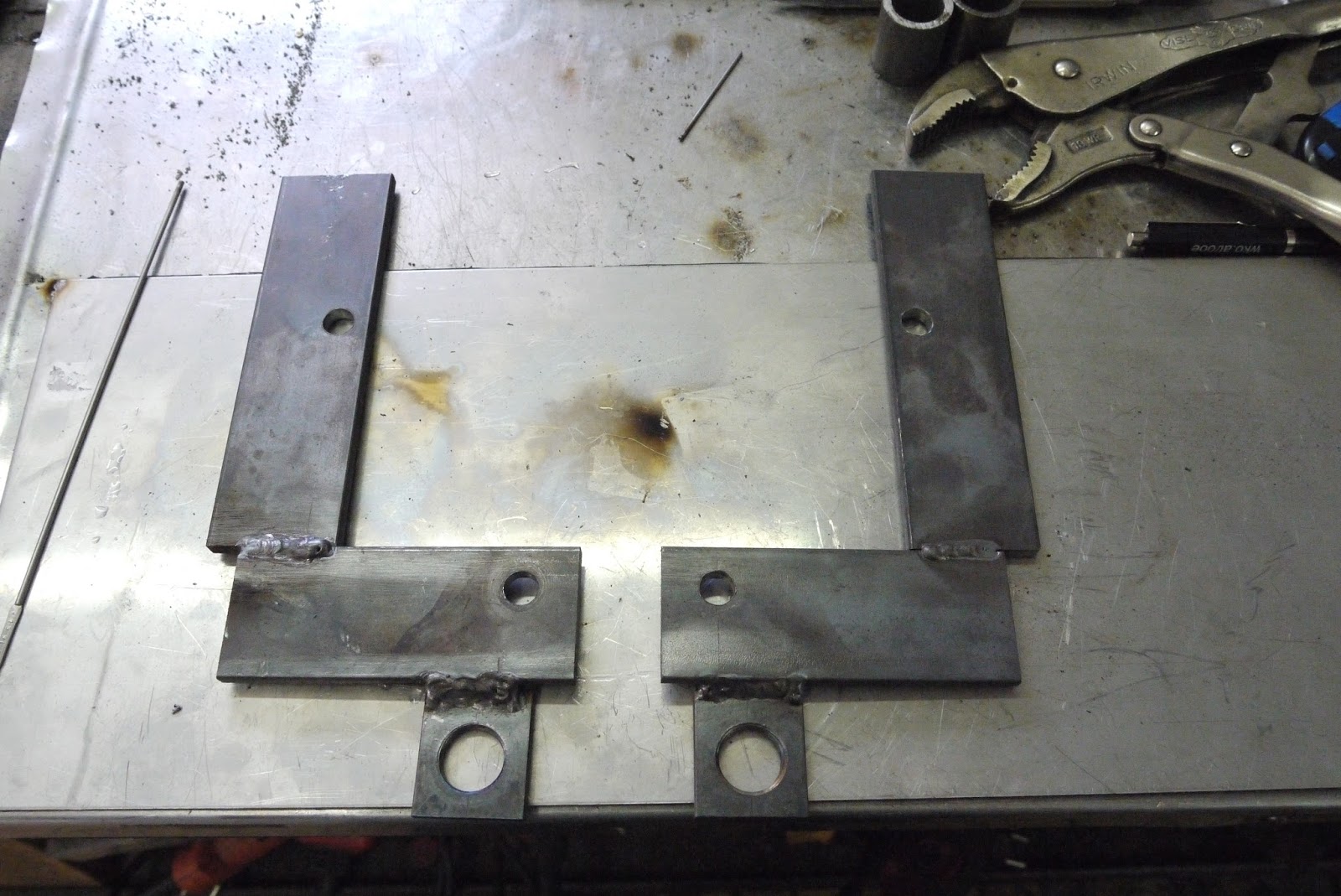
I love Spring. Days getting longer and warmer, riding the bike doesn't mean dressing up as if I were to go to a mission to Antarctica and lots of bike-stuff to play around with. The downside is, my own projects always tend to limp behind a bit. Now making those axle plates hasn't exactly been an easy job, mainly because they had to go in a) very limited space and b) have to be rigid enough in both dimensions.
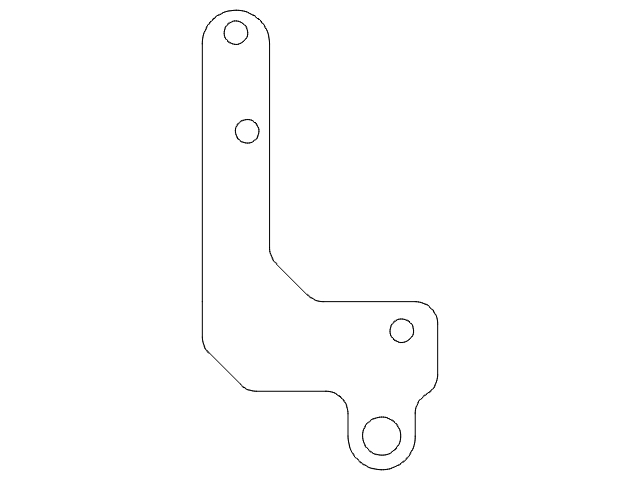
As a matter of fact, these are only the prototypes, which I made to get everything to line up dimensionally and base a CAD-drawing on. The actual parts will be waterjet-cut and then milled to size and I genuinely hope to have them back on Friday, so I can do the milling on the weekend.
Wednesday, 22 March 2017
Crude formula to calculate boost
... for (non-360 degree) twin engines and fours like VW-flat twins. In reality you have to figure in a lot more variables, but just to make a rough guess, whether the supercharger needs to be over- or underdriven or simply be reduced to a mechanical hairdryer, because you have to spin it so much faster than it was intended to.
Now let's have a look at the Eaton M45 setup on the TR1 and use the formula above:
Supercharger displacement: 45 c.i. ~ 737cc
Engine displacement of my TR1.1 engine: 1063cc = 531.5cc
Ratio: 1:1 = 1
Result: 5.6PSI
There's quite a few reasons, why in real life you (most likely) won't see exactly this figure:
1) engine efficiency and blower-efficiency are blatantly ignored in this formula
2) blower efficiency varies with blower RPM
3) overall pressure has simply be assumed to be 14.7PSI and varies greatly with altitude
Assuming that we roughly hit the numbers calculated above, why can't we spin the blower faster and faster or why can't we simply use a much bigger blower. As with every mechanical machine, there's friction and all sorts of losses involved. Friction being one of the main contributors (among the work of compressing air. Luckily supercharger-manufacturers usually provide spec sheets, outlining where the "efficiency island" is in the pressure map and even more importantly where the redline for a supercharger is. This redline basically marks the point, where your blower turns into a mechanical hairdryer and only pumps hot air into the engine. (Incidentially on an Eaton M45 this is 16,000RPM, just to give you an idea!) On the other hand, a blower needs a certain minimal RPM to actually pump air efficiently, which is why you can't simply fit an Eaton M90 and then only run it on half engine speed and expect it to work somewhat efficiently. And as if this weren't enough, add the fact, that you have to apply some power to actually drive the supercharger, which can actually go up into the two-digit horsepower figures with said Eaton M90.
I hope you find this post (mildly) useful and I'd love to see/hear/read about at least one supercharger build one day that was sparked by this post outlining that it is a lot less of a dark art as some professional companies try to make you believe...
| ... that's of course meant to say - 14.7 |
Supercharger displacement: 45 c.i. ~ 737cc
Engine displacement of my TR1.1 engine: 1063cc = 531.5cc
Ratio: 1:1 = 1
Result: 5.6PSI
There's quite a few reasons, why in real life you (most likely) won't see exactly this figure:
1) engine efficiency and blower-efficiency are blatantly ignored in this formula
2) blower efficiency varies with blower RPM
3) overall pressure has simply be assumed to be 14.7PSI and varies greatly with altitude
Assuming that we roughly hit the numbers calculated above, why can't we spin the blower faster and faster or why can't we simply use a much bigger blower. As with every mechanical machine, there's friction and all sorts of losses involved. Friction being one of the main contributors (among the work of compressing air. Luckily supercharger-manufacturers usually provide spec sheets, outlining where the "efficiency island" is in the pressure map and even more importantly where the redline for a supercharger is. This redline basically marks the point, where your blower turns into a mechanical hairdryer and only pumps hot air into the engine. (Incidentially on an Eaton M45 this is 16,000RPM, just to give you an idea!) On the other hand, a blower needs a certain minimal RPM to actually pump air efficiently, which is why you can't simply fit an Eaton M90 and then only run it on half engine speed and expect it to work somewhat efficiently. And as if this weren't enough, add the fact, that you have to apply some power to actually drive the supercharger, which can actually go up into the two-digit horsepower figures with said Eaton M90.
I hope you find this post (mildly) useful and I'd love to see/hear/read about at least one supercharger build one day that was sparked by this post outlining that it is a lot less of a dark art as some professional companies try to make you believe...
Tuesday, 21 March 2017
TR1 (non-stock) breather routing
This one was asked for by David from Oz as I have commented a few times on how I have modified my breather setup to reduce oil-loss through the breather, as the set of pistons I currently run actually already have a bit of blow-by at high rpms (over 7k).
As you can see (unlike stock) I use a long tube that goes over the back of the frame and down into a breather filter. The step rise is there to have the condensed oil run back into the engine, whereas the water vapour will just be blown out. The same system (and inspiration) can be seen on old Guzzis, Yamaha SRs/XTs (that's where I go the idea from) and old classic superbike Kawa Zeds and Suzuki GS thous. Which also somewhat means there has to be a grain of truth in it...
This is by NO MEANS a branded filter, but it doesn't have to be. It's surface is a multitude of the cross-sectional area of the breather tube, so even if it might not flow as well as a K&N or any other branded filter, it will EASILY be good enough. And honestly, the filter is only meant to prevent dirt from getting into the engine, so it doesn't have to do much really.
I hope this answers all the breather-related questions, if you still have any or noticed other mods that you absolutely want to see a post about, let me know via mail or just write a comment below and I see what I can do about it.
Sunday, 19 March 2017
Eaton M45 on a TR1, perhaps?
I am of course not (yet) admitting that there will be a new project, but a potential project has already been christianed "Project Super TR1".
This post is mainly meant to give you an idea on the overall dimensions of an Eaton M45. And the next post will give you a *VERY* crude formula to work out supercharger sizing for your engine and thereby outline, why an M45 is about the right size for an 1100cc V-twin, but too big for a 1000cc inline four.
Let's dive into it then: The Eaton M45 I use, is out of a early 2000s Mercedes C180/200 Kompressor and goes by the Mercedes part no: A 271 090 20 80 or Eaton 307961.
By the way this is what you'll usually find, when you buy one from a wreckers:
As a matter of fact, only the portion in the red box is the actual supercharger. It measures approx. 250 by 180 by 130mm (length, width, height). An M62 is the same width and height, but is substantially longer and the M62 has got an electro-magnetic clutch behind the pulley, which is also the easiest way to find out which model the supercharger is that you're looking at. The other thing to note: This particular Eaton blower spins clock-wise and the pulley is roughly 71.5mm in diameter.
The following pictures are merely to illustrate how I took the measurements.
In the next post, I'll outline a *VERY* crude formula for guesstimating (I won't go as far as call this a calculation) supercharger-sizing in relation to engine size and thereby calculate also the resulting boost.
Friday, 17 March 2017
Guzzi V65 TT exhaust build
Now this exhaust build was an interesting challenge, as all I had was a badly scanned photography of the old factory V65TT-C.
The first tricky part was, that room in the cylinderhead was very limited and the exhaust pipe had to be necked down to 32mm.
Next step was to weld up some of the tubing in order to have some bits to play around with.
Then it's time to play a bit of Lego and puzzle the bits together to ressemble an exhaust.
And that's what it looked like in the end (all in all about two weeks from the start).
Tuesday, 14 March 2017
The XS Triple Sidecar - Earles Fork (part 1.1)
... or tidying up. As you might have noticed, there hasn't been a post in a few days, mainly because uni has started again and I am current spending quite a bit of my spare time on building an exhaust for a Guzzi V65 TT for a friend's dad.
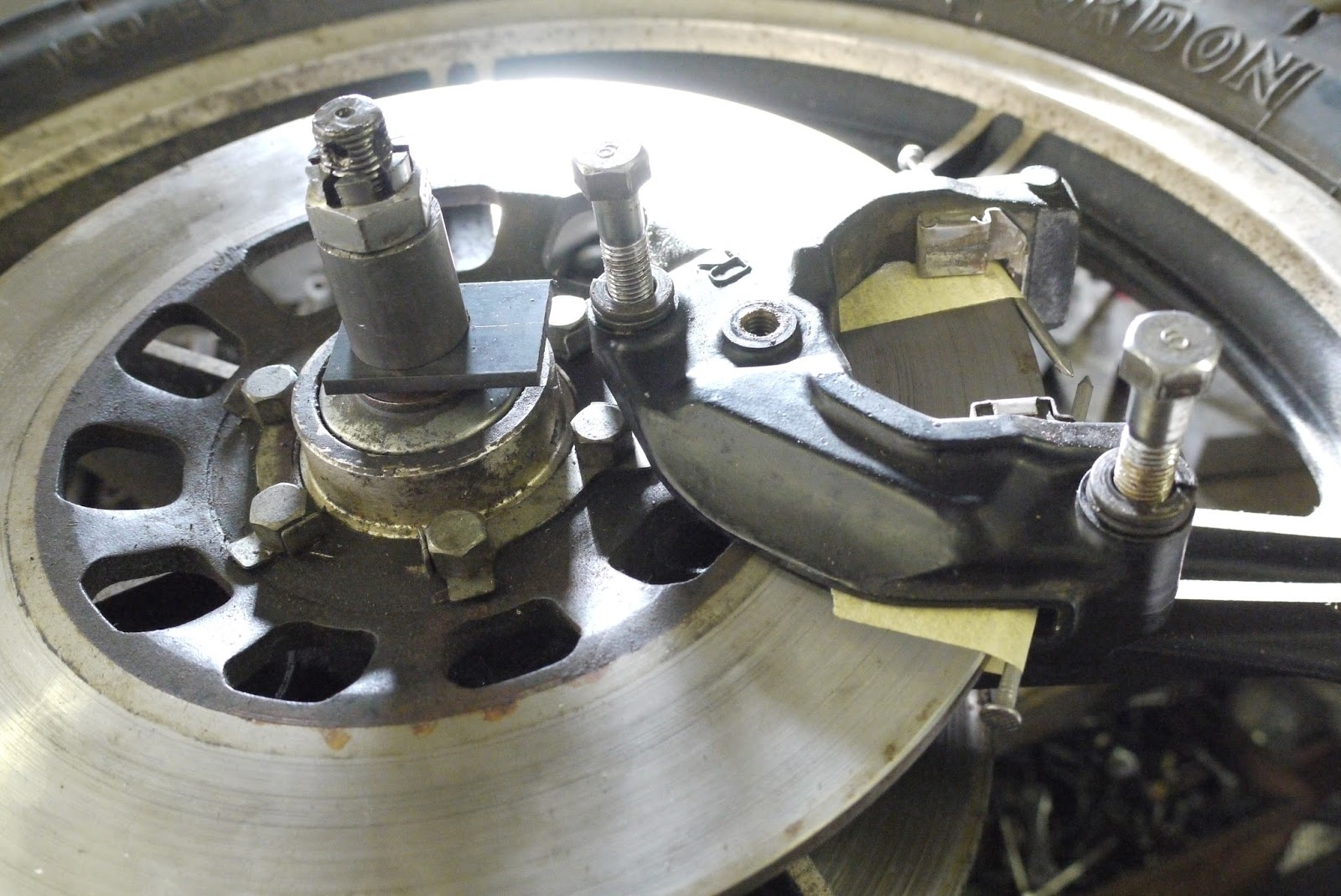
Even little progress is progress, now the forks are wide enough so that the brake-caliper mounts fit in as well, just have to build them.
Maybe there's some time on the weekend to make a bit more progress!
Even little progress is progress, now the forks are wide enough so that the brake-caliper mounts fit in as well, just have to build them.
Maybe there's some time on the weekend to make a bit more progress!
Subscribe to:
Posts (Atom)