Showing posts with label xt600. Show all posts

Sunday, 8 September 2024

Dre-XT-Stück - self-retracting sidestand

 Let's assume you have a (pretty) extensively modified motobike in a country with relatively strict laws on the matter and it's time for the annual inspection (TÜV/MOT/call it what you will, you get the idea - overhere it's colloquially simply called "the sticker"). Now the logical assumption would be that the bike failed on one of the more or less obvious modifications and not one of the few bits that were still stock. 

So now we're turning the sidestand into one of the self-retracting variety. (Not that something like this ever existed on an XT600 before 1987 and this one is a mid 1984 model.)


 After looking at how it is done on other Yamahas of the era, I dug out a German model XV750 or XV1000 sidestand and realized the only thing I really needed was a pin to act as an over center pivot.


As that weld has to take ALL of the force of the spring and is under pressure all the time while it is parked on the sidestand, I decided to make a proper weld with the amps cranked up to eleven-and-a-half.


 Looks pretty unassuming and very stock. 


... and that was all it took to pass the inspection.

Saturday, 13 January 2024

Dre-XT-Stück - brakepump upgrade

Let's agree that even when new XT600s weren't exactly known to be the absolute wonder-weapons when it comes to braking and admittedly the addition of a later model (still single piston though) brake caliper, steel braided brakehose and a freshly rebuilt brake master only got it to a level, where I am willing to call it a very early version of ABS. Or in other words: that front brake sucks. 

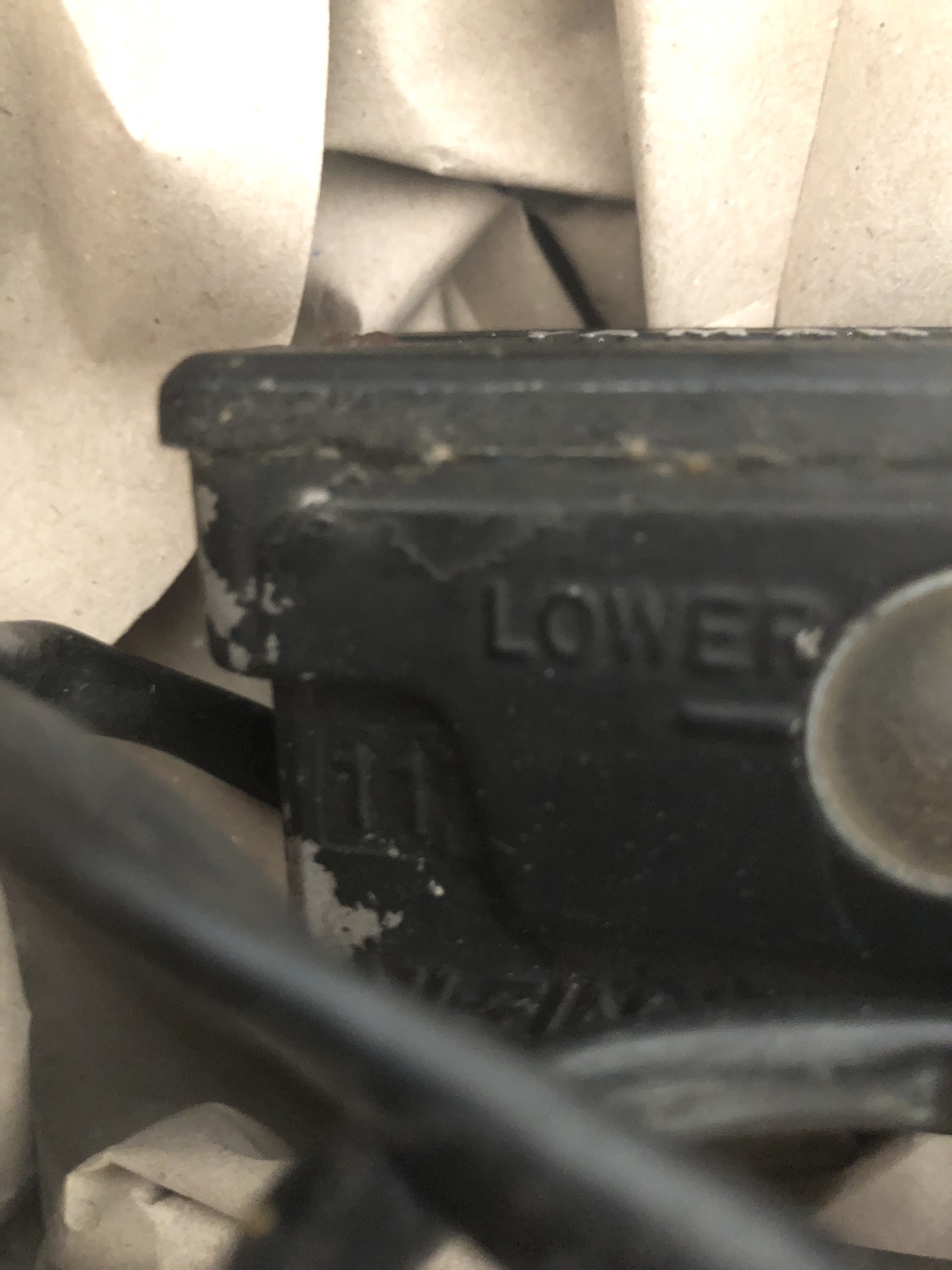
And here it is, the answer to the question: what else can you do? What we have here is a 1980ies vintage XT350, 55V brake pump. Looks pretty similar to the one fitted at the moment, except for this little "11" marking.

Which stands for 11mm brake piston diameter instead of 1/2" (12.5mm) and those 12 percent less diameter result in 12 percent more travel on the lever, but also 12 percent more clamping force on those brake pads. 

Unfortunately this isn't a genuinely new idea or in other words, these pumps are pricey. So much so that at the current rates, four pumps would cost the same as the bike. Which in turn means, I went for a rather affordable example. It wasn't affordable without a reason, the lid has got some road rash, the bolts holding on the lid are hopelessly rusted and obviously the original brake lever pivot bolt was replaced with the "box-o-random-nuts'n'bolts" finest. 

Not that this ever stopped me from anything really. A bit of heat and a bit of penetrant got both the old mirror mount and the bolts off the lid open. The latter admittedly with the help of a bit of Newtonian persuasion.

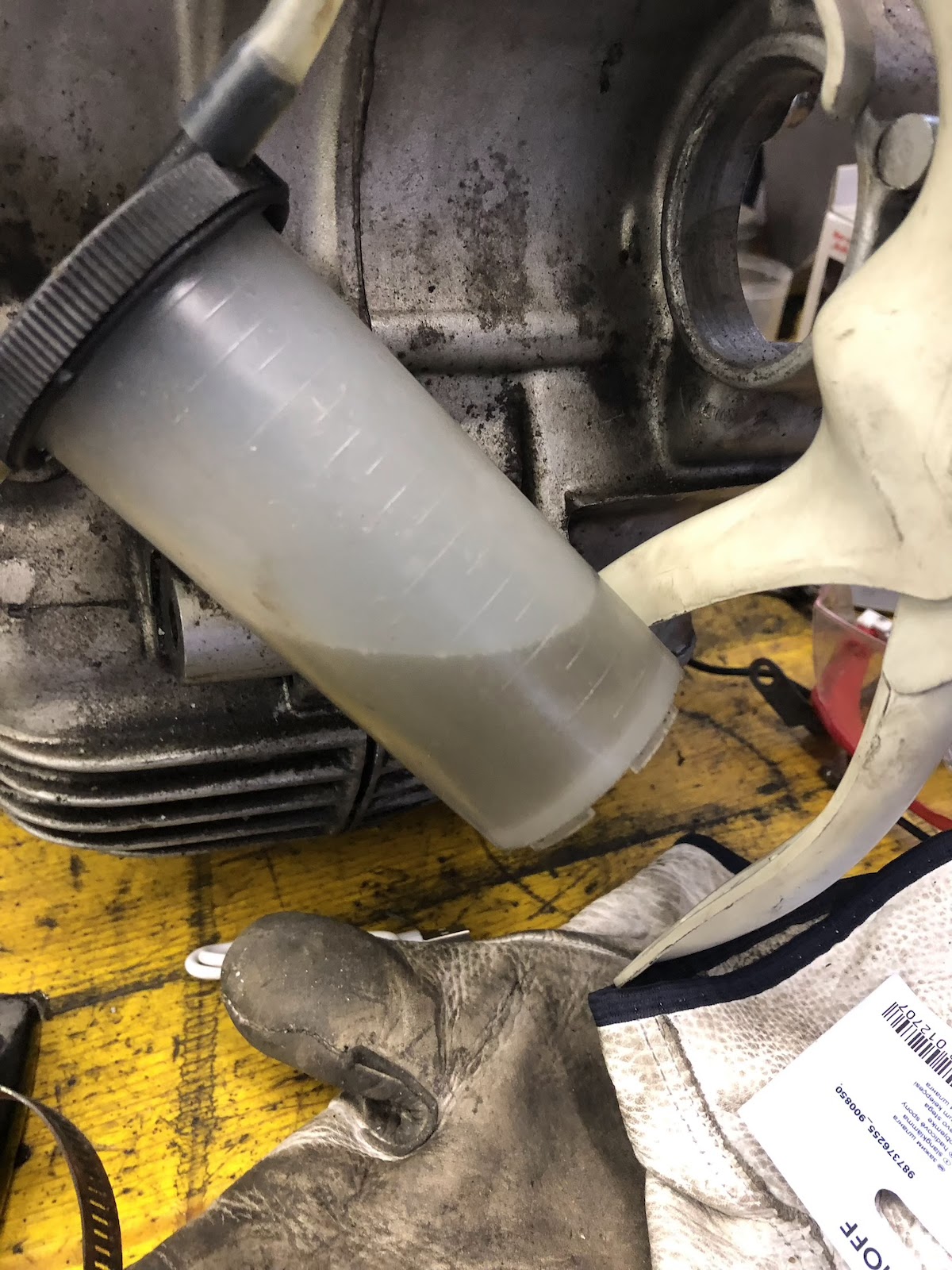
The brakefluid in the reservoir had turned into something rather nasty.

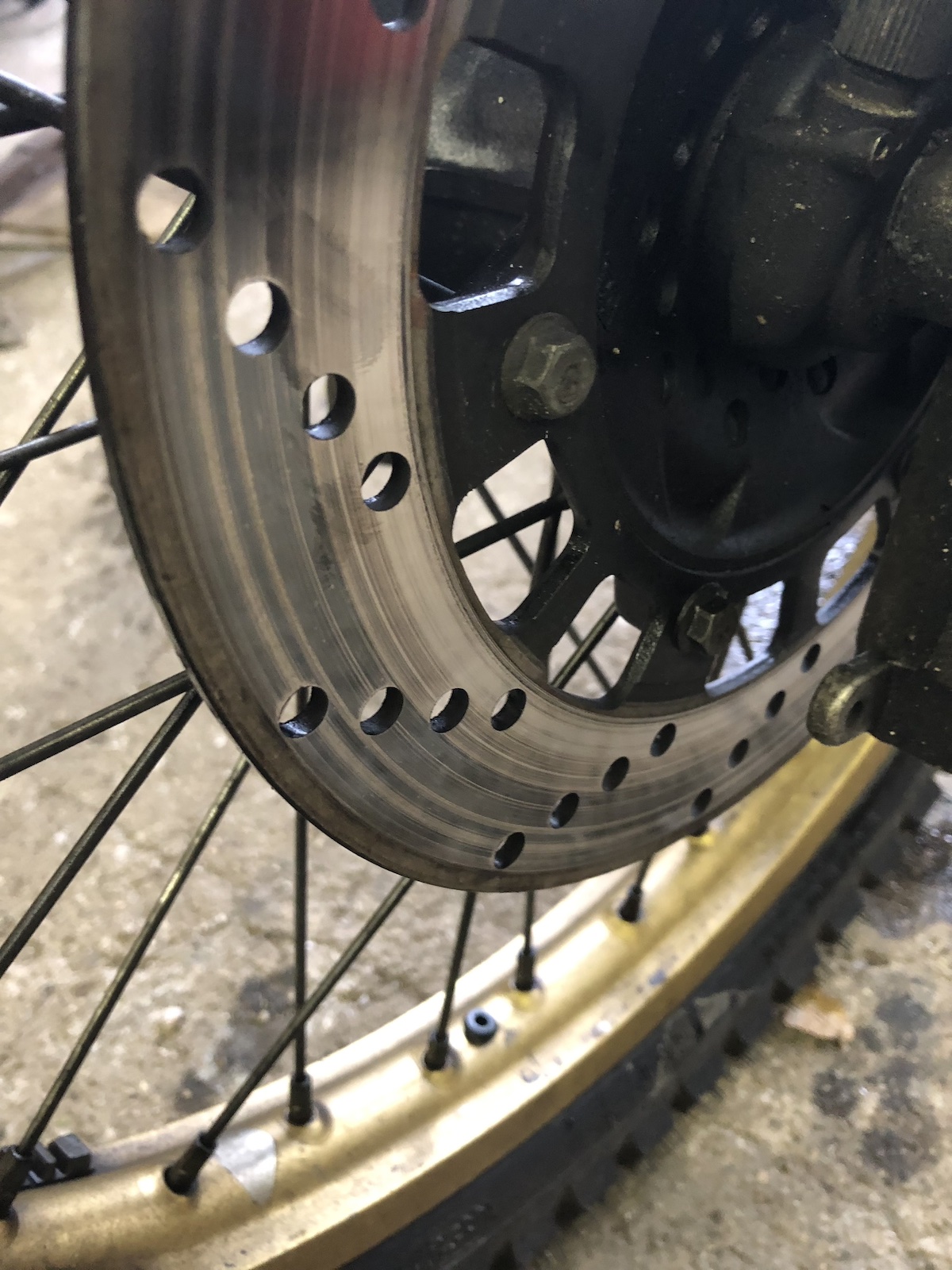
Some decent bolts and a new(-ish) brakeline later, brake performance was at bluing the disk levels and that was still with a set of glazed pads. 


As is already somewhat custom, the sightglass wasn't just a bit dull, but completely blind. So I drilled an 8mm hole into the plastic, well I tried as the "glass" crumbled away and then levered out the backside metal shield and knocked the remnants of the glass out with a drift. This also meant that the outer metal ring was pretty much unsupported and I could easily pry it out with a flat blade screwdriver.

As there's a very convenient hump on the inside, the new glass was pressed in with a set of parallel-jaw pliers in absolutely no time.

And with the mirror and the handguard reinstalled it looks pretty much as it did before. 

Verdict: can't recommend enough to do this mod. In fact 1984 and 85 models would have come with a variant of exactly this brake master cylinder, so strictly speaking on the very first Teneré model (34L) and perhaps the very first XT600 (43F) models, it would actually be the right tool for the job. Unfortunately it was too cold and icy to really test out what the new setup can do, but with a set of half decent (i.e. not glazed) pads I bet it can work wonders. 

ADDENDUM: With the temperature being in the double digits above zero in the last few days, I had a go on the Dre-XT-Stück, really just running some otherwise rather bland errands, but boy oh boy does the old girl brake now. She even did her first (little) stoppie at a traffic light today.

Saturday, 23 December 2023

The pretty one - fixing stripped head bolt threads

 The pretty one is my dad's XT500T 4 valve. What it is, is essentially a XT600 2KF, but with a smaller bore (87mm) and the cylinder head off a JDM XT400. This means it has got smaller valves and a smaller combustion chamber  than a stock XT600. Whilst in a sense it is good that Yamaha put the effort in to make the engine work decently with the smaller bore, it also created its own set of problems. Whilst engine parts for the 600 are comparatively cheap and definitely plentiful this is definitely not the case for the 500 version as it was pretty much only sold in Austria. This should answer the question why we didn't simply get another cylinder and be done with it. Also yes, you can convert it to 600cc, but that would still mean you'd have to bore out the engine case and quite simply my dad didn't want this. (Remember when I did a frame swap, i.e. registered a new bike, because that was easier than converting Dre-XT-Stück to 600cc? There might be an explanation hidden in there somewhere...)

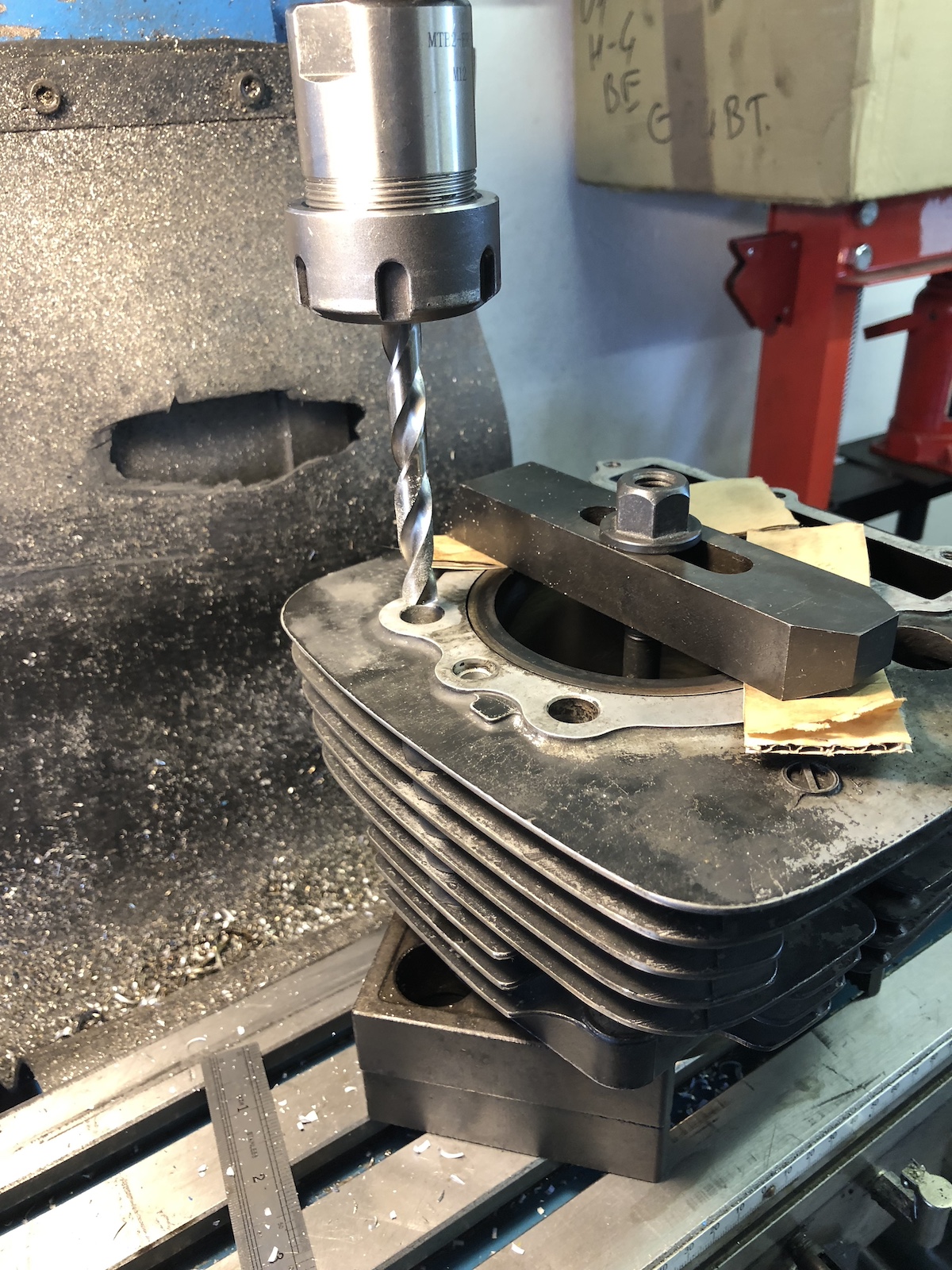
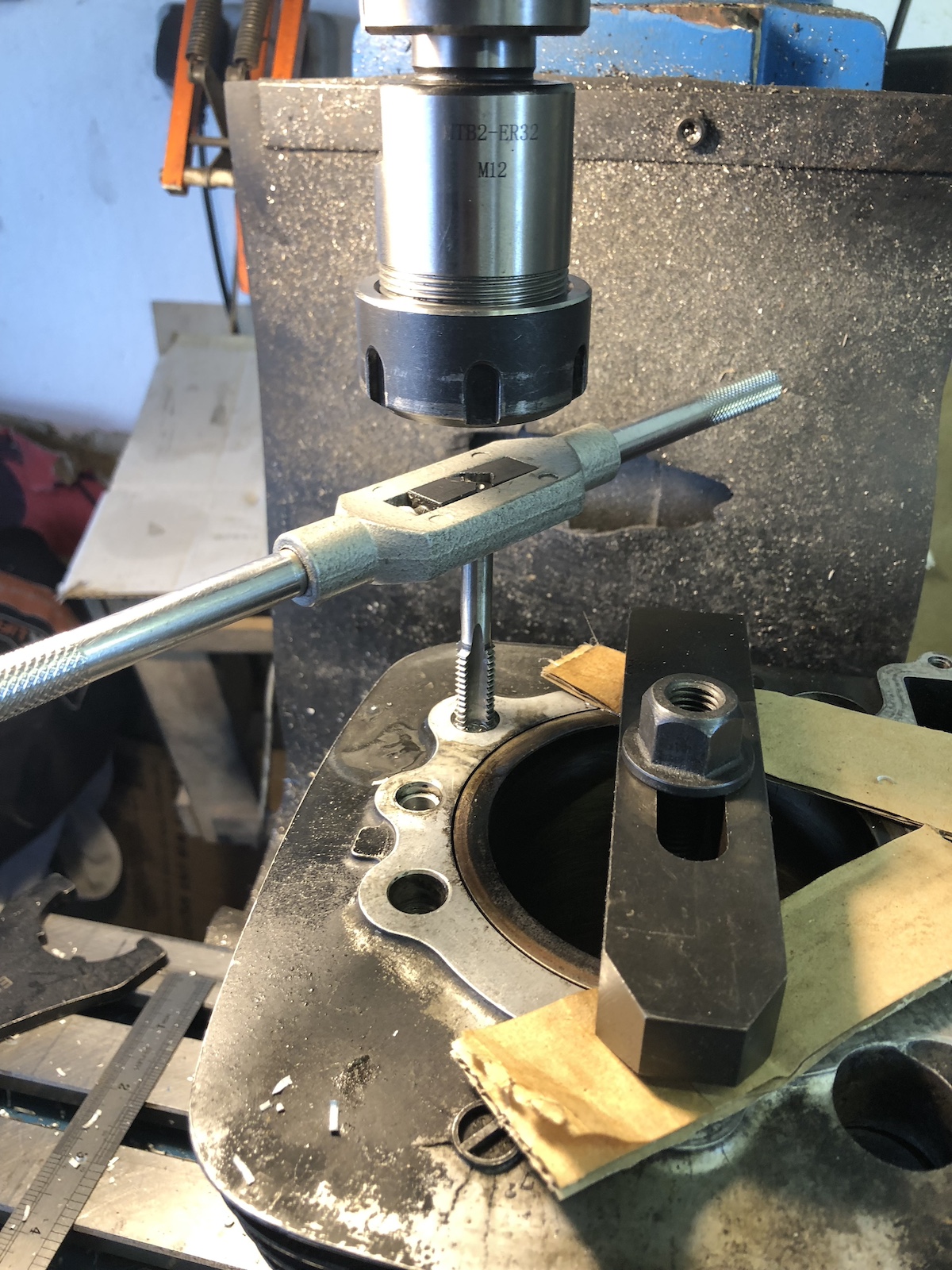
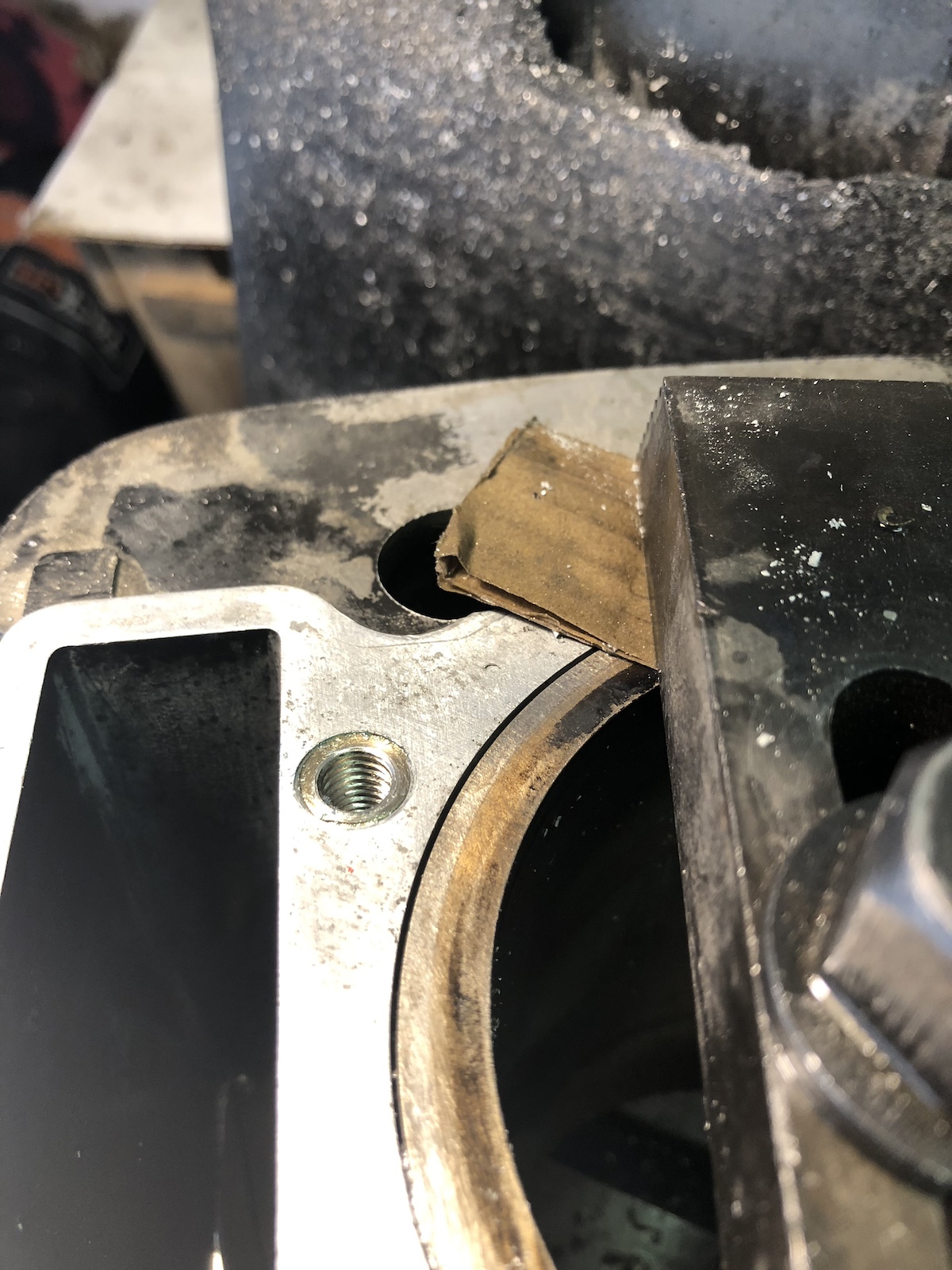
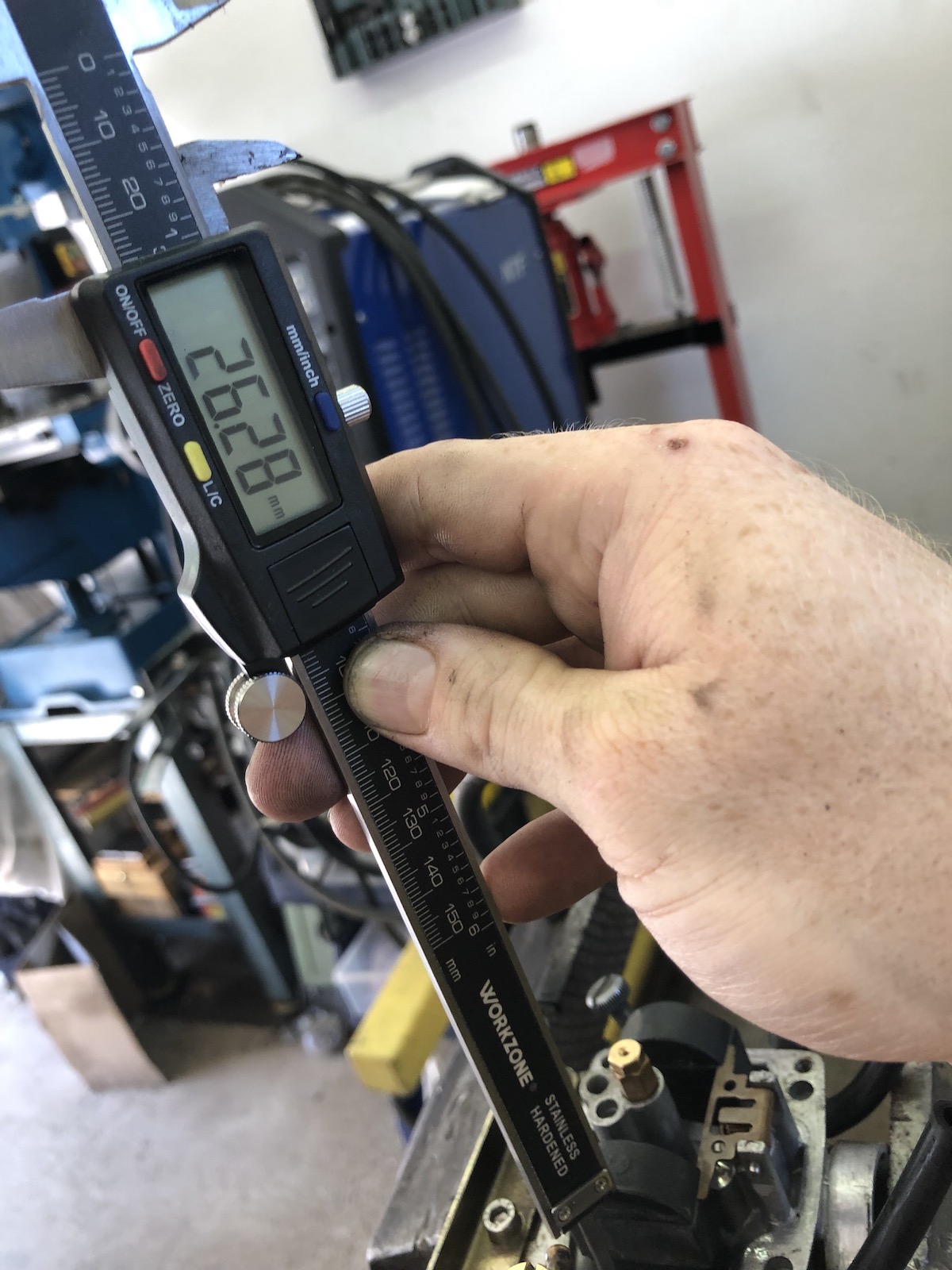
So the story with the headbolt threads follows a very classic recipe: The headbolts are M8, they are torqued to 30NM and they go straight into the aluminium of the cylinder. The cylinder in question has already been helicoiled three times, but there were two installation failure as I found out during the repair. A more permanent solution was needed and it came in the form of a handful of homemade threaded inserts. They are M12 on the outside and M8 on the inside and the ones I ended up using where 20 and 30mm long.

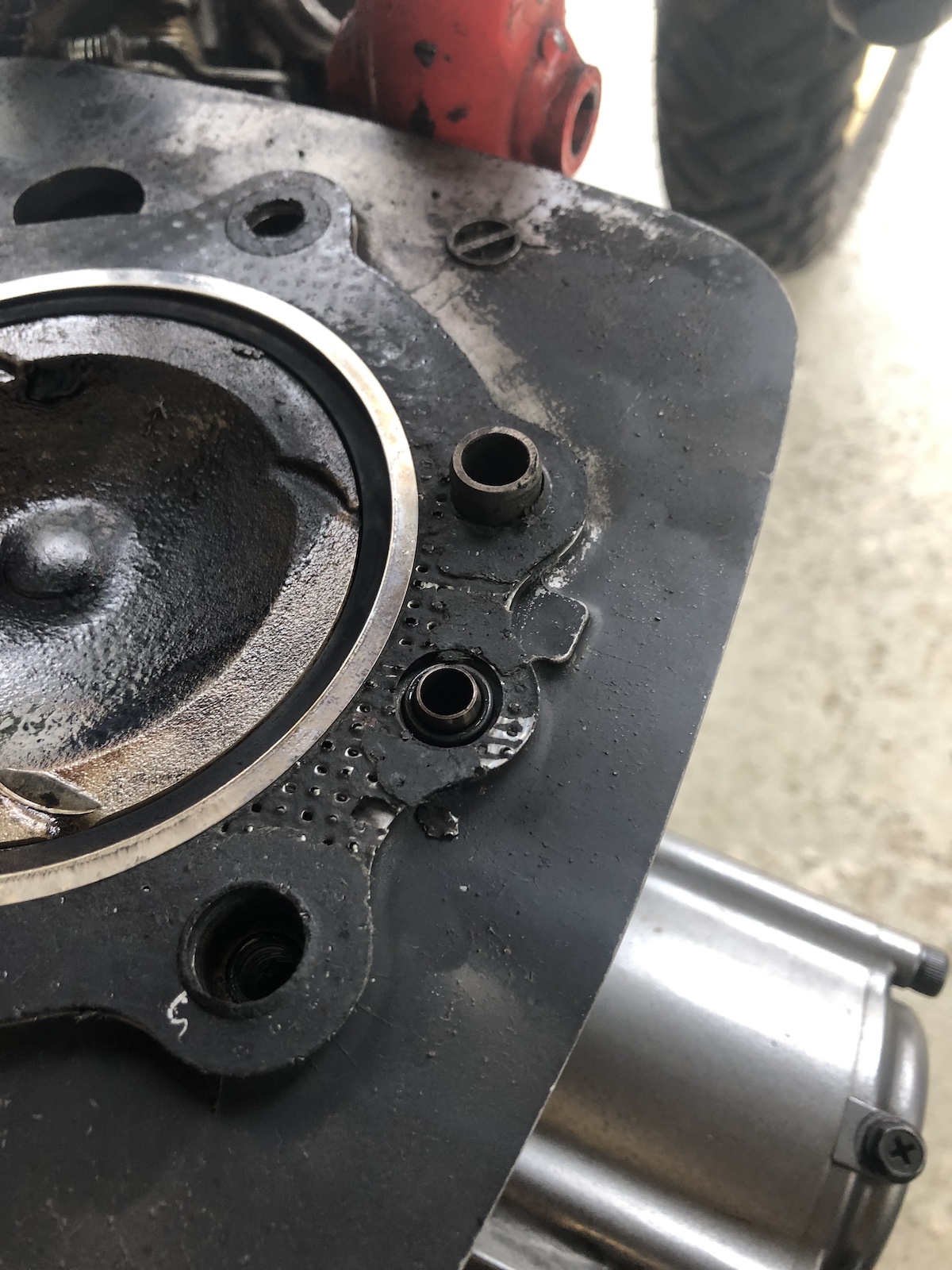
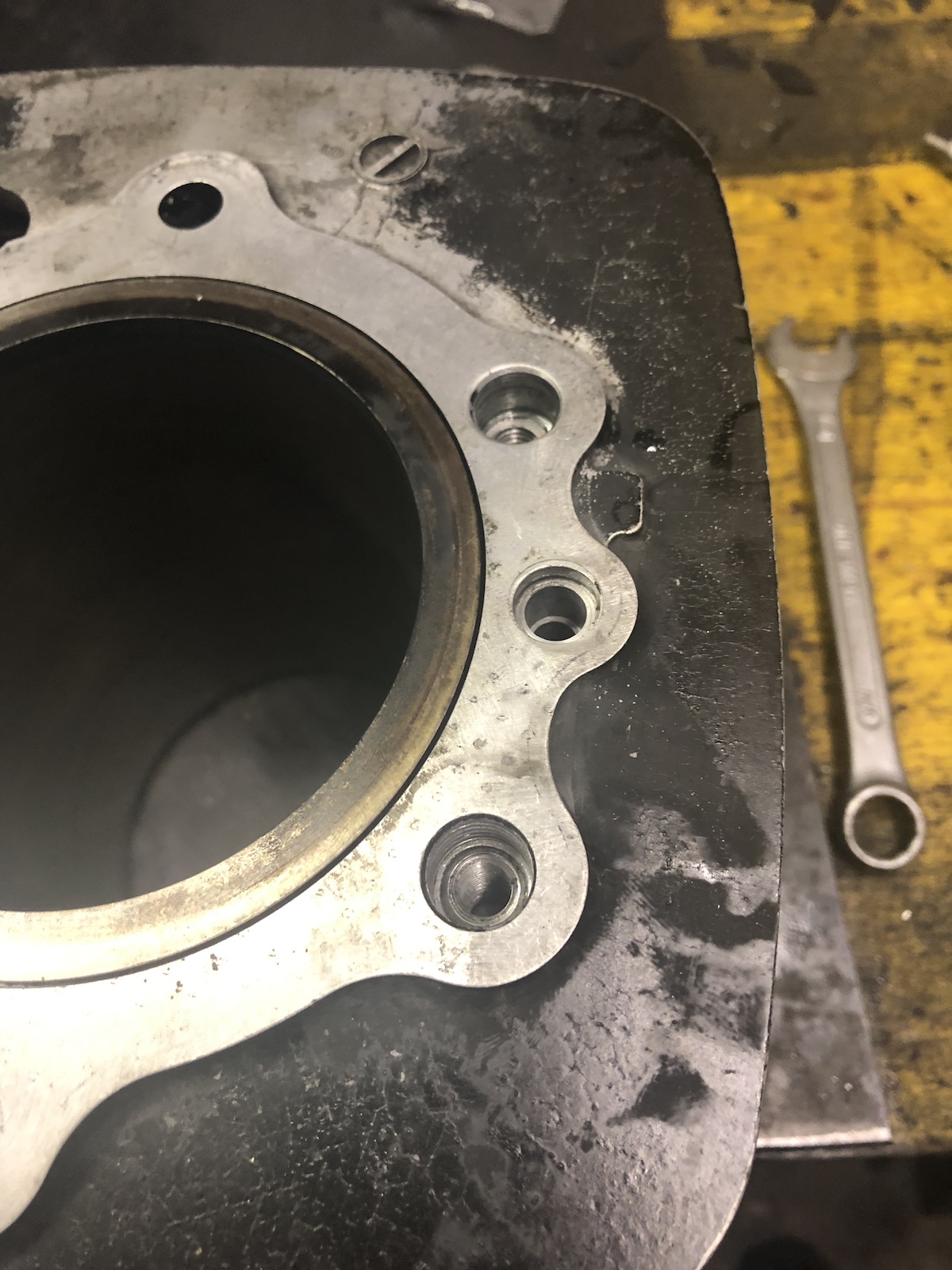
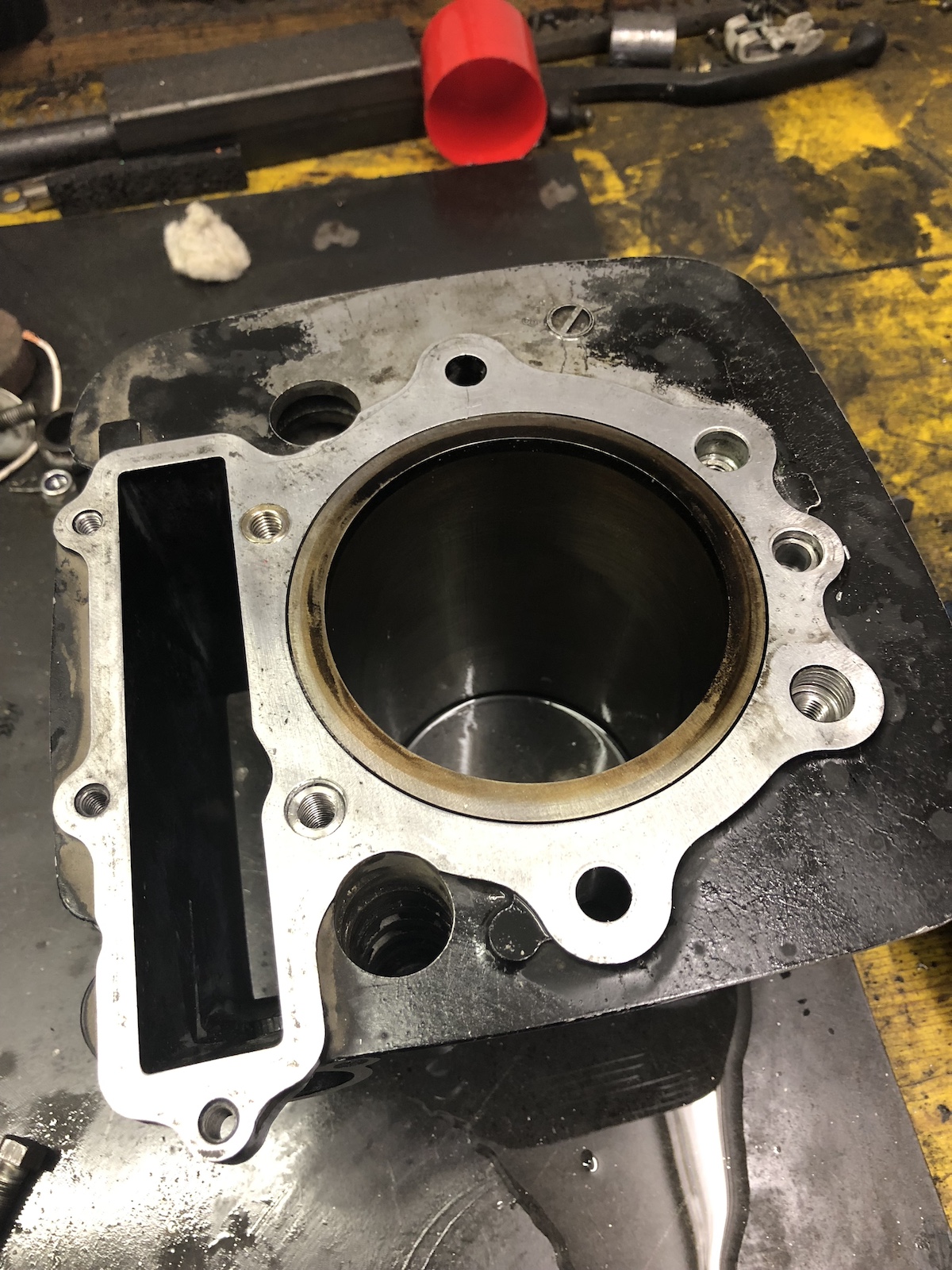
After taking the head off, it was pretty obvious where the headgasket leak was.


I (wrongly) assumed that the biggest challenge with this repair would be to install the recessed threaded inserts... as the first one had spat out its helicoils this was a very straight forward job. Nerve wrecking, but simple enough.


On the second one, the helicoil was still in there, but as I found out, the locking tab hadn't grabbed correctly and I just pulled it out. 

Installation was simple enough: an M8 bolt, a nut, a spacer and the insert. (Yes the spacer is also made from a bit of turned down M12 threaded rod. 


Just to be really sure the inserts were glued in with some high strength locking adhesive.


Test fit with the locating dowels in place worked a treat.

Somewhat inspired by all of this, the next day I decided to upgrade all remaining headbolt threads as well, including the one with the only working helicoil of the previous repair attempt. It did not go well.

As the previous attempt of getting a helicoil out worked rather well, I didn't think much of it and snapped my drill about 10mm below the surface when it locked up. Those were two not very funny hours.

... the final one was a case of "more of the same" was every bit as pleasantly straight forward as one could have hoped for. (And yes, I had made a new spacer in the meantime.)

The finished product.

What followed next is the "usual" assembly of an XT engine, though I have to admit that there's a distinct difference between a completely sh*gged example and a well-cared for two-owner bike. 


Apparently last time I swapped the headgasket I made the same mistake as on the Dre-XT-Stück with choosing the wrong time mark (talk about consistency), so that was rectified in the same go.


... and that one bit where I decided it was time to ruin the purity and replace some mangled JIS screws with some stainless M4x25 allen heads.

The first startup was pleasantly unexciting. Let's hope it stays this way. 

Merry Christmas dad. 😌

(Yes there's plenty more work that needs to be done to make it usable, but at least for now it seems as if the head's going to stay where it is supposed to be.)

Saturday, 13 August 2022

Dre-XT-Stück - a rejet won't quite cut it

At the end of the previous post on the old girl or about 500km ago, if that's how you want to measure time, I was pretty convinced that a rejet would be the ticket to find the missing horses in the XT's engine. But first I had to find the poor electrons and a bit of magic smoke that attempted to escape the old girl's wiring loom. As most of the electrics had fallen silent, I assumed that the capacitor I use as a battery replacement had called it quits. So this time I upgraded from a 4700µF to a 47000µF/25V capacitor, also with the intention of making the indicators work at idle and giving the regulator a bit of an easier time. 

Initially I ordered two caps, but the second one was a 47000µF at 63V and about the size of a pint glass - makes a good conversation piece or paperweight.

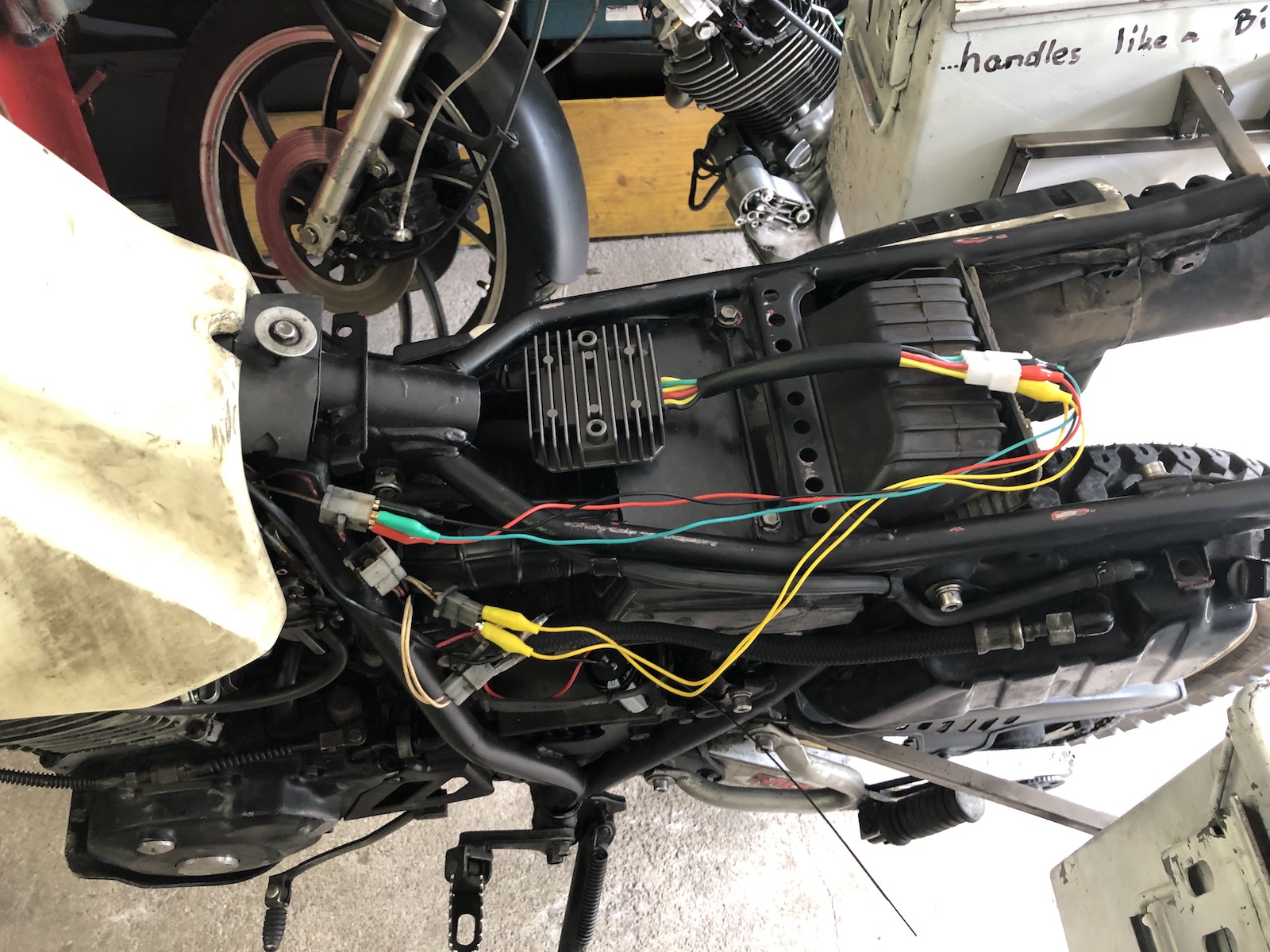
I'll spare you the gory details, but in the end it turned out to be a massive short that involved the switched 12V power source from the ignition barrel and the ground coming from the neutral switch. During testing I suspected the regulator to be behind the whole issue (assuming some sort of internal short), so I built this beautiful setup for testing.

As that didn't reveal anything (why should it this part was working just fine), I used an old bilux bulb as a dummy load between the alternator's two phases to see if they still put out anything.

It works significantly better, if you actuall plug the bulb into the one coming from the alternator and not the one from the regulator. (Did I mention I did a college for micro-electronics... yeah, time well spent. 😉 )

Somewhere around this time I worked out that as soon I unplugged the neutral switch the fuse would continue to work, so I called it "good enough" for now. Keeping in mind that finding those elusive ponies was a process that went on for several weeks, I tackled quite a few jobs along the way. One was that the joint between headers and exhaust can would constantly leak and chew the graphite gaskets. It turned out that if one sliced up a bit 44.5mm exhaust tube and shoved it over header that would completely eliminate the need for said gasket. (18 Euros a piece...)

As the stock 43F-muffler is in a bit of a state (and there's something rattling around inside of it), I was pretty convinced that one of the internal baffles had fallen over and thus was blocking the exhaust. But then there was also this lovely Arrow Paris-Dakar replica exhaust. Full stainless, freshly repacked, but unfortunately meant for a Honda XR600. (Some might recall, I have an actual XT600 version as well, but that's the smaller diameter version, which is loud as all hell.) It turned out that only the last bit of the snout of had to be slightly remade.
Actually fits nicer than the stock exhaust.

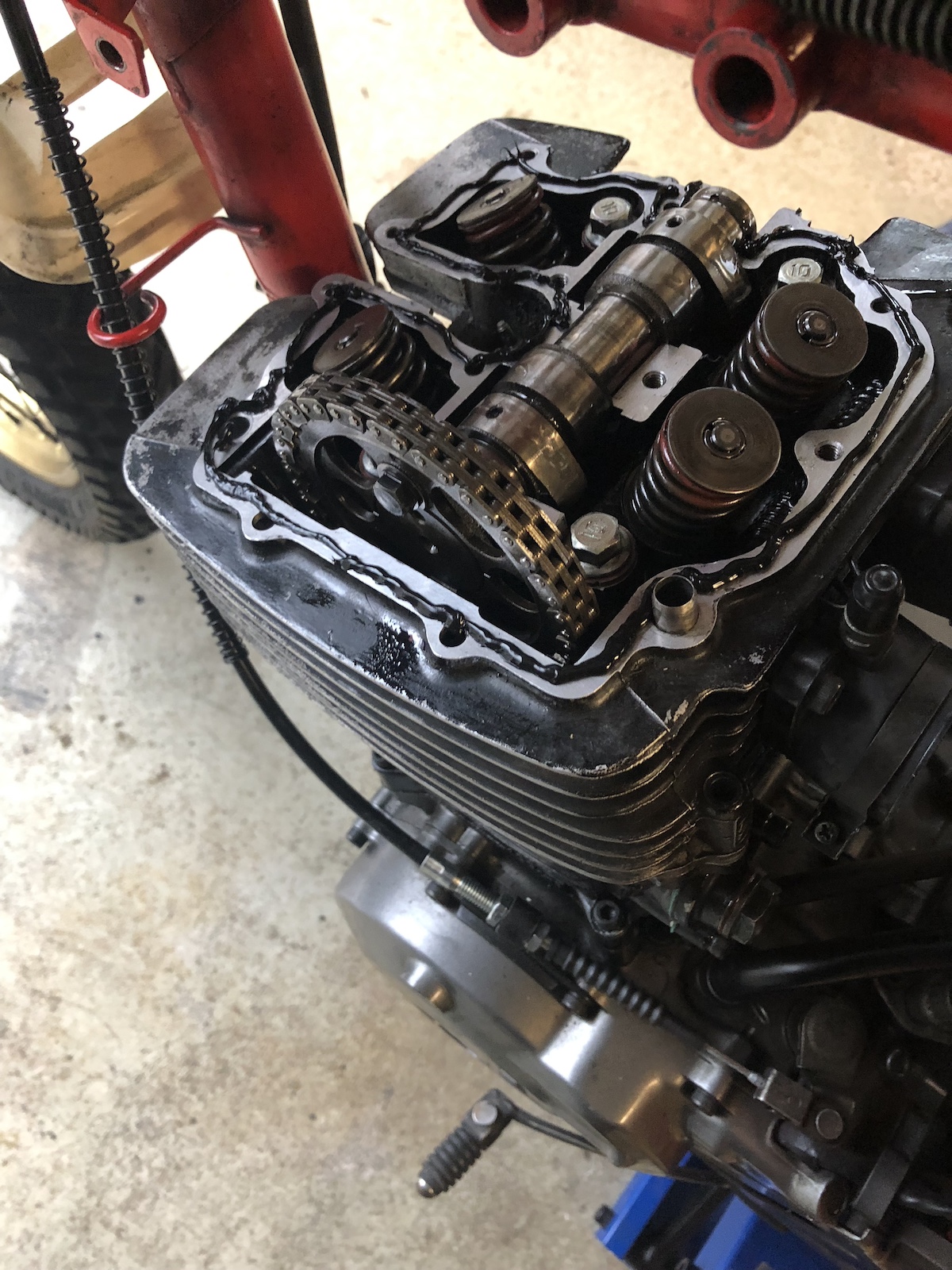
After playing around with various carb jettings and basically only deteriorating performance, I concluded that the only valid resolution would be to alter the cam-timing. 

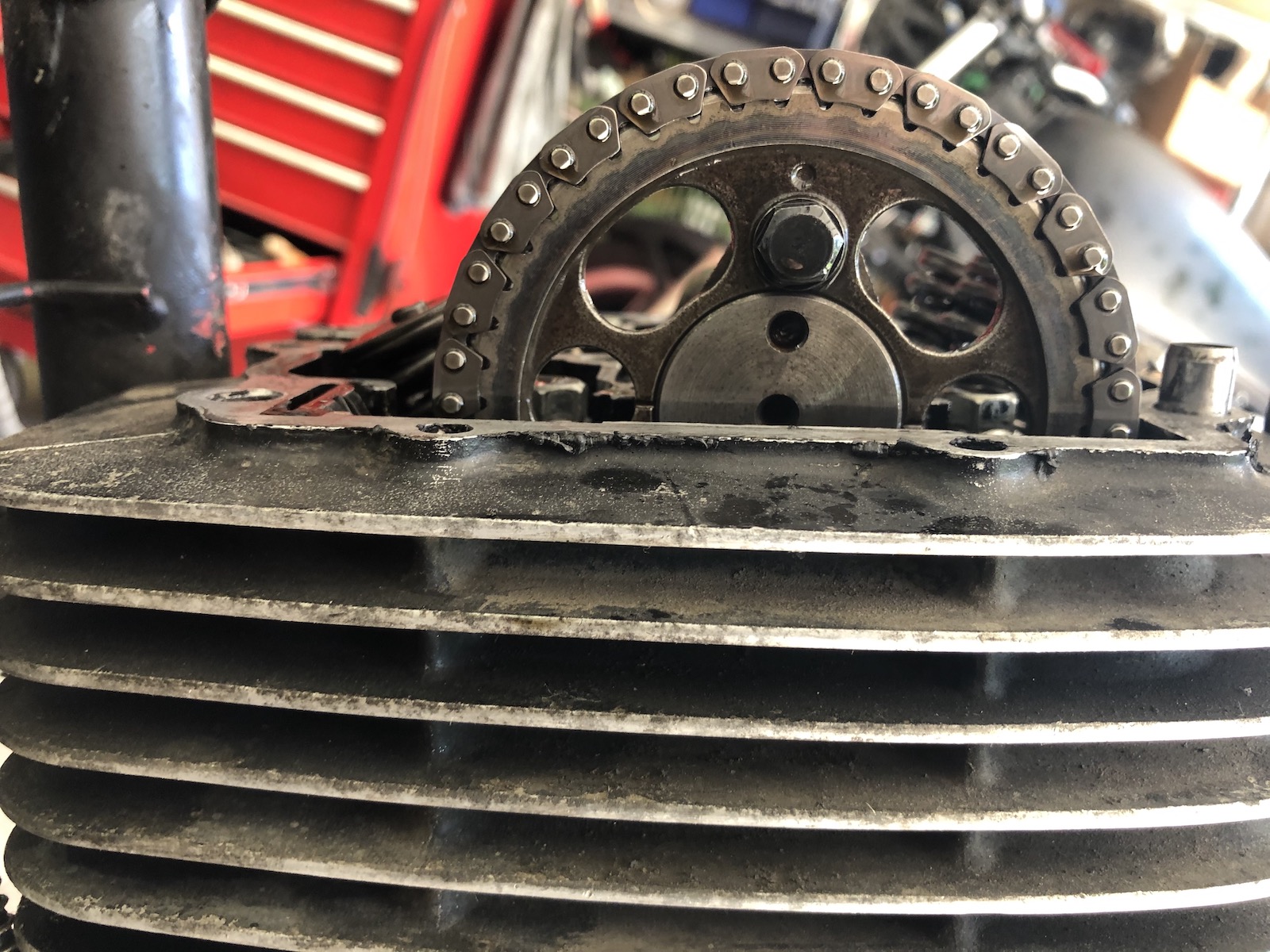
There's that trick from long-time XT owners that if the camchain is stretched just enough, one can breath some new life into the engine, by advancing the camshaft one tooth to compensate for the elongated camchain.

Didn't work, but when I was in there to correct my mistake, I took the time and welded on a bung for my AFR-meter. 


Which was the moment, when things changed from a bit strange to VERY INTERESTING.

With the engine off I let the probe (auto-)calibrate for a good 30 seconds.

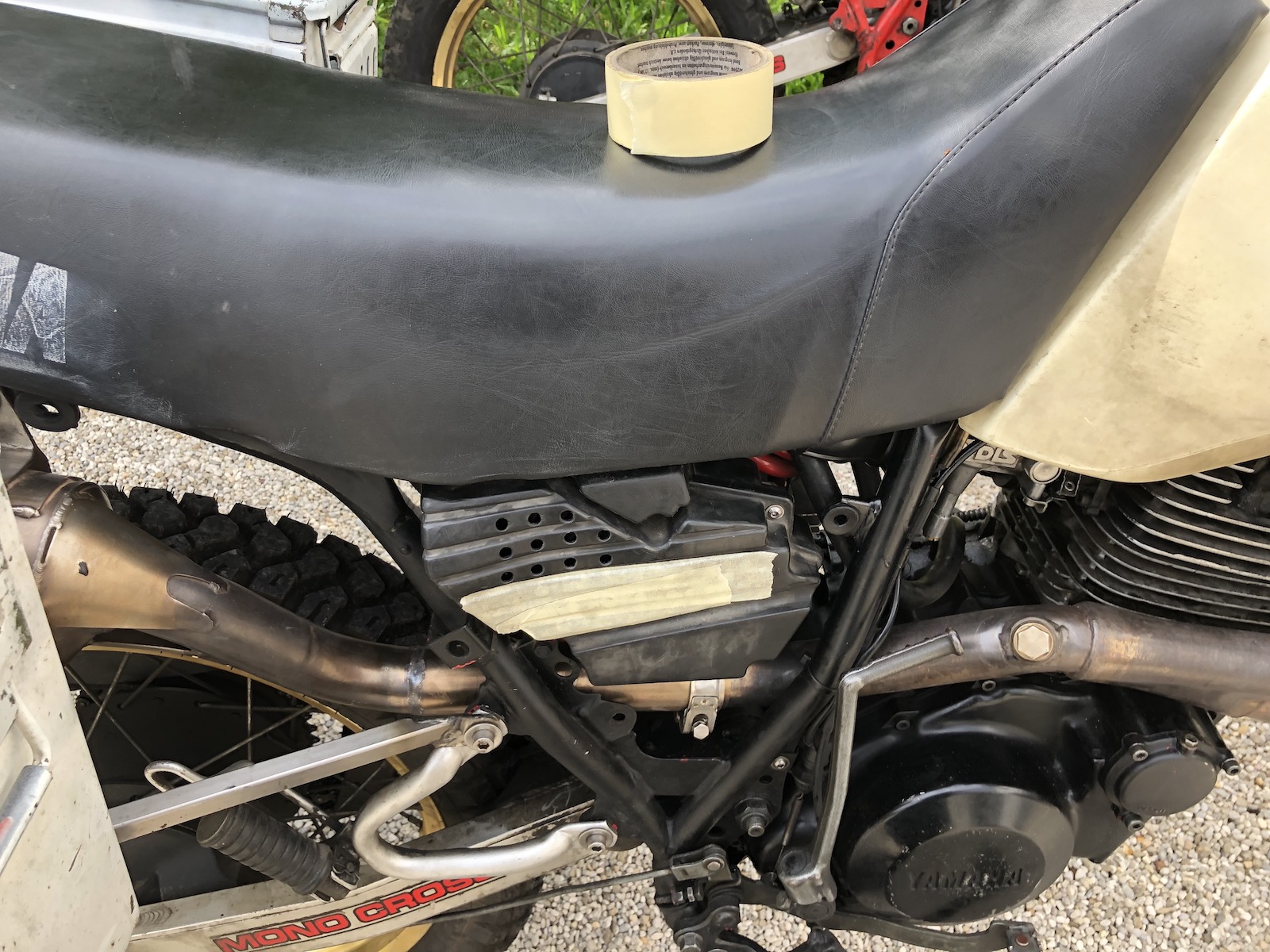
Kicked the old girl into life and started to doubt the reading on the instrument. 10.8:1 is quite rich and a good explanation for just how well it starts in the morning. But at mid RPMs it would completely stop working and break up. Now as you can see above the airfilter cover looks like a sieve and the jetting at this point was close to stock, yet the bike was running so rich it was unbelievable.

So surely it must an ignition issue. Found a new coil, swapped it in. Same result.

So attempt to reduce the amount of air with some lovingly applied masking tape. Same result.

Float levels - a classic. Ruined fuel economy, made starting annoyingly difficult. Same result.


At some point I got very annoyed and got my hands on these puppies. (Haven't tried them out yet, but I will!)

Then even threw in a spare TM33 carb body, which would have been a lovely solution to a problem, I didn't have, but the carb body is too wide to make it work.


With the carbs basically ruled out, engine timing ruled out there's one thing left and that's ignition timing. Now the ignition is non adjustable on these beasts. With the engine on TDC, there's this lovely little mark showing up EXACTLY on the pointer. It does look kind of odd for a TDC-marker though.

Well, it looks odd, because it isn't a TDC-marker and strangely enough, the engine will run, if timed to this one. I still haven't managed to measure just how many degrees out this actually was, but I'd say at least 15 degrees early. 

At which point it was just a matter of taking everything apart again, rejet to the last known working jetting and then do 500km of this. The Dre-XT-Stück is not meant to become some mad super sporty offroad racing bike, more of a hiking boot with a nice backpack that I can tour on for hours and just chill. The fact that she's got some get up 'n' go coming from that 633cc engine won't exactly do harm.

In an attempt to express my gratitude to the old girl, I got her some jewelry. New shiny bolts for the yokes to be precise and even more importantly flushed the clutch cable with oil. Lots of oil.


In return those panniers proved to be incredibly for all those transport-duties that would otherwise be completely impossible to achieve - like delivering "Strudel" from my Grandma to my girlfriend.